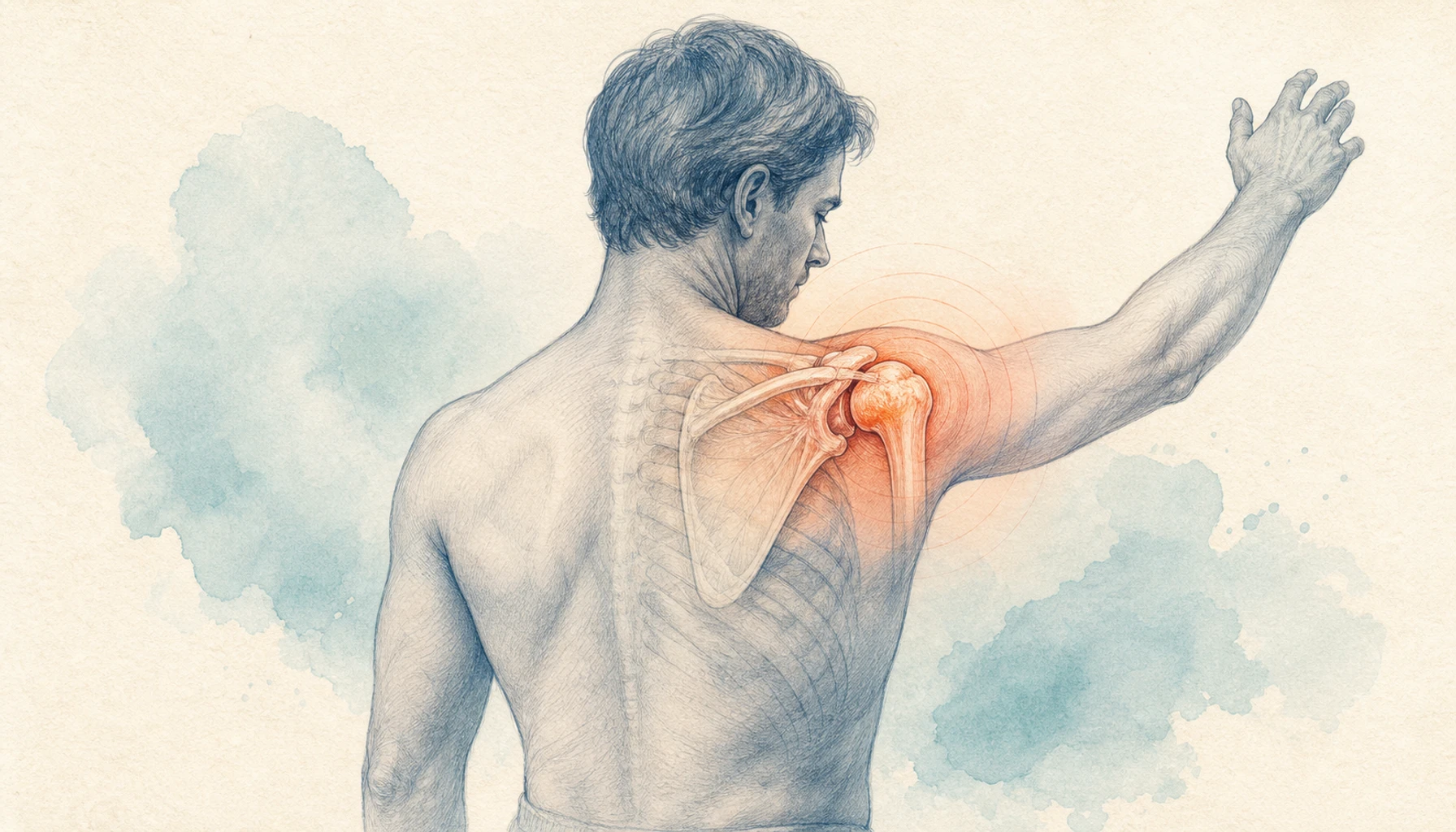
Arthritis is one possible cause of shoulder pain. It commonly produces a deep ache, stiffness, reduced motion, and grinding or clicking inside the joint. Tendon and muscle problems are more likely to hurt during a specific movement. A neck nerve problem may add tingling, numbness, burning, or pain that reaches the hand.
No symptom can confirm arthritis by itself. A clinician combines your history and physical examination with imaging when it is needed. X-rays can show joint-space narrowing, bone spurs, and other changes associated with arthritis.
Shoulder pain vs arthritis at a glance
| Clue | Shoulder arthritis | Other common shoulder pain |
|---|---|---|
| Typical feeling | Deep ache within the joint | Sharp, catching, sore, burning, or movement-specific pain |
| Stiffness | Common and may gradually increase | Varies with the affected tendon, muscle, bursa, or nerve |
| Movement | Motion can become limited in several directions | Certain reaches or lifts may be much harder than others |
| Sounds and sensations | Grinding, clicking, or crepitus may occur | Clicking can also occur with tendon or stability problems |
| Arm and hand symptoms | Usually centered around the shoulder | Tingling or numbness suggests that a nerve should be checked |
| Evaluation | Examination and often an X-ray | Examination guides whether imaging or nerve testing is useful |
What shoulder arthritis usually feels like
The American Academy of Orthopaedic Surgeons describes pain and stiffness as the most common symptoms of shoulder arthritis. The pain may worsen with activity and become more persistent as the condition progresses. Night pain is also common, a pattern covered in our guide to shoulder pain that gets worse at night.
The location can vary with the joint involved. Arthritis in the ball-and-socket joint often causes a deep ache toward the back of the shoulder. Arthritis in the acromioclavicular joint, where the collarbone meets the shoulder, can hurt at the top of the shoulder and feel worse when the arm crosses the body.
Stiffness may make it harder to reach overhead, put on a coat, fasten clothing behind the back, or comb your hair. Grinding, clicking, or a rough sensation during movement can accompany the pain. These clues support a clinical assessment, but they do not prove that arthritis is the source.
Other causes can create similar shoulder pain
Rotator cuff irritation or a tear often hurts when lifting or lowering the arm. It may cause weakness and pain along the outer upper arm. Our overview of how the rotator cuff works explains why overhead movement can aggravate these tissues.
Bursitis and impingement can make reaching overhead or lying on the shoulder painful. A recent strain may cause localized tenderness after lifting, sport, or an unfamiliar task. Frozen shoulder causes marked stiffness as well as pain. The direct comparison in shoulder pain vs frozen shoulder explains the movement pattern clinicians look for.
Pain that begins in the neck and travels through the shoulder can come from a cervical nerve. Tingling, numbness, or weakness in the hand or arm deserves attention. See shoulder pain vs cervical radiculopathy for the main differences.
How clinicians check for shoulder arthritis
A clinician will ask when the pain began, which movements affect it, whether there was an injury, and how it changes your daily activities. The examination may compare motion, strength, tenderness, and joint sounds in both shoulders. Neck and nerve checks may be included when symptoms travel down the arm.
An X-ray can show arthritis-related bone changes and loss of space between the joint surfaces. Imaging findings still need to match the symptoms and examination. Some people have arthritis visible on an X-ray without that finding fully explaining their current pain.
Comfort and movement options
Treatment depends on the type and severity of arthritis and on your overall health. A clinician may recommend activity changes, physical therapy, medicines, injections, or surgery. Our guides to common shoulder pain medicines and ice, heat, and compression provide general background for a treatment conversation.
A Shoulder Compression Wrap can hold a hot or cold gel pack around the shoulder for short-term comfort when your clinician says temperature therapy is appropriate. It cannot diagnose arthritis or correct joint damage. Protect your skin, follow the product directions, and stop if heat or cold increases pain or causes skin changes.
When temperature therapy is appropriate, compare five shoulder ice pack wraps by compression method, hot or cold capability, included packs, sizing, and current manufacturer details.
Exercise plans should fit your diagnosis and current range of motion. Forceful stretching through sharp pain can aggravate an irritable shoulder. A physical therapist can select an appropriate starting point and adjust the plan as motion and strength change.
When to seek care
Arrange an evaluation when shoulder pain keeps returning, limits normal movement, gets progressively worse, or repeatedly interrupts sleep. Seek prompt care for sudden weakness, numbness, a major injury, deformity, fever with a hot swollen joint, or an inability to move the arm.
Call emergency services for shoulder or arm discomfort with chest pressure, shortness of breath, sweating, nausea, lightheadedness, or pain in the jaw, back, or neck.
Common questions
Can shoulder arthritis cause pain down the arm?
It can create aching around the shoulder and upper arm. Pain, tingling, or numbness that reaches the hand or fingers can point to nerve involvement and should be described to a clinician.
Does shoulder arthritis always show on an X-ray?
X-rays often show changes in established arthritis, including joint-space narrowing or bone spurs. Early disease and other painful conditions may require a broader evaluation. An image is interpreted together with your symptoms and examination.
Can arthritis and a rotator cuff problem happen together?
Yes. More than one shoulder condition can be present. Strength testing, movement testing, and imaging can help a clinician determine which findings are affecting function.
This article provides general education and is not a diagnosis or personal treatment plan. Read our medical disclaimer. A qualified healthcare professional can evaluate persistent pain, stiffness, weakness, or loss of motion.