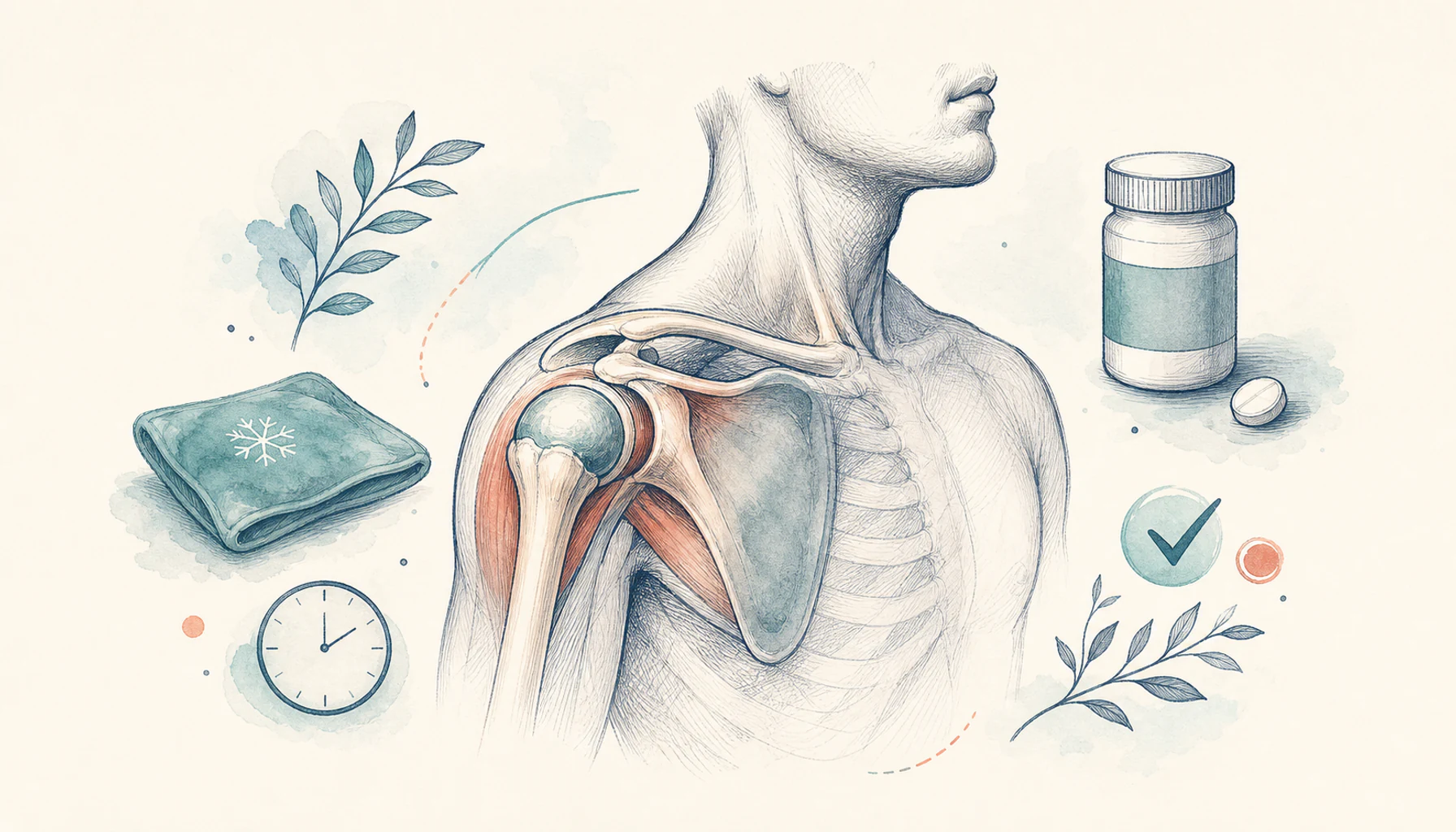
Acetaminophen can help relieve mild shoulder pain. Ibuprofen or naproxen may help when inflammation is involved and nonsteroidal anti-inflammatory drugs, or NSAIDs, are safe for you. The right choice depends on the cause of the pain, your health history, pregnancy status, and any other medicines you take.
Shoulder pain can come from a strained muscle, an irritated tendon or bursa, arthritis, a rotator cuff injury, or pain traveling from the neck. Medicine may make the pain easier to manage. Ongoing weakness, stiffness, numbness, or pain after an injury may need a medical evaluation.
Common over-the-counter medicines for shoulder pain
- Acetaminophen: Relieves pain without reducing inflammation. Liver disease, alcohol use, and other medicines can affect whether it is safe for you.
- Ibuprofen: An NSAID that can reduce pain and inflammation. It may be useful for short-term soreness related to a minor strain or irritated tissue when the label and your medical history allow it.
- Naproxen: Another NSAID used for pain and inflammation. Its effects generally last longer than ibuprofen, so its dosing instructions are different.
- Topical pain relievers: Some creams and gels are sold for muscle or joint pain. Check the exact label before applying one to your shoulder. The U.S. over-the-counter label for diclofenac 1% arthritis gel says it has not been shown to work for shoulder pain and should not be used for immediate relief of sprains or strains.
How to choose a pain medicine safely
Read the Drug Facts label every time, even if you have taken the medicine before. Follow the stated dose, wait the full amount of time between doses, and use the medicine for the shortest period you need it.
Many cold, flu, headache, sleep, and prescription pain products contain acetaminophen. Taking two products with acetaminophen can cause an accidental overdose. The U.S. Food and Drug Administration says adults and children age 12 and older should not exceed 4,000 milligrams from all products in 24 hours. Your product label or clinician may set a lower limit.
Ask a clinician before taking acetaminophen if you have liver disease or drink three or more alcoholic drinks a day. Taking too much acetaminophen can cause liver failure, sometimes before obvious symptoms appear.
Ibuprofen, naproxen, and aspirin for pain belong to the NSAID family. Taking more than one NSAID can raise the chance of serious side effects. Ask a clinician or pharmacist before using an NSAID if you have a history of stomach ulcers or bleeding, kidney or liver disease, heart failure, high blood pressure, a previous heart attack or stroke, or if you take a blood thinner.
Shoulder pain medicine during pregnancy
Pregnancy changes which medicines may be appropriate. The FDA advises avoiding NSAIDs at 20 weeks of pregnancy or later unless a health professional specifically recommends them. NSAIDs can cause rare but serious kidney problems in an unborn baby and may lead to low amniotic fluid.
Shoulder pain during pregnancy needs urgent attention when it occurs with abdominal or pelvic pain, vaginal bleeding, dizziness, weakness, or fainting. These can be warning signs of an ectopic pregnancy. Read more about shoulder-tip pain in ectopic pregnancy.
The American College of Obstetricians and Gynecologists advises people receiving methotrexate for an ectopic pregnancy to avoid NSAIDs because they can affect how methotrexate works. Contact the clinician managing your pregnancy before choosing a pain medicine in this situation.
Other ways to manage shoulder pain
Short-term pain relief can make ordinary movement more comfortable. Gentle activity is often reasonable for uncomplicated soreness. A physical therapist may also prescribe assisted mobility exercises after examining the shoulder.
RangeMaster's guide to ice, heat, and compression explains common non-drug options. The article on corticosteroid injections for shoulder pain covers a treatment that requires a clinician.
Opioids are generally not recommended as routine first-line treatment for acute musculoskeletal injuries. Guidance from the American College of Physicians and the American Academy of Family Physicians favors other treatments because opioids carry substantial risks and often offer limited added benefit for this type of pain.
When to get medical help
Call emergency services for shoulder or arm pain accompanied by chest pressure, shortness of breath, sweating, dizziness, nausea, or pain spreading to the jaw, neck, back, or arm.
Seek prompt care after a major injury, with a visible deformity, sudden swelling, or an inability to move the arm. A red, hot, swollen shoulder with fever can signal an infection. New or worsening weakness, numbness, or persistent tingling also needs medical attention.
Arrange an evaluation if the pain keeps getting worse, repeatedly wakes you from sleep, or has not started improving after two to four weeks.
This article provides general health information and is not a diagnosis or personal treatment plan. Read our medical disclaimer. A doctor or pharmacist can help you choose a medicine based on your symptoms, medical conditions, pregnancy status, and current prescriptions.