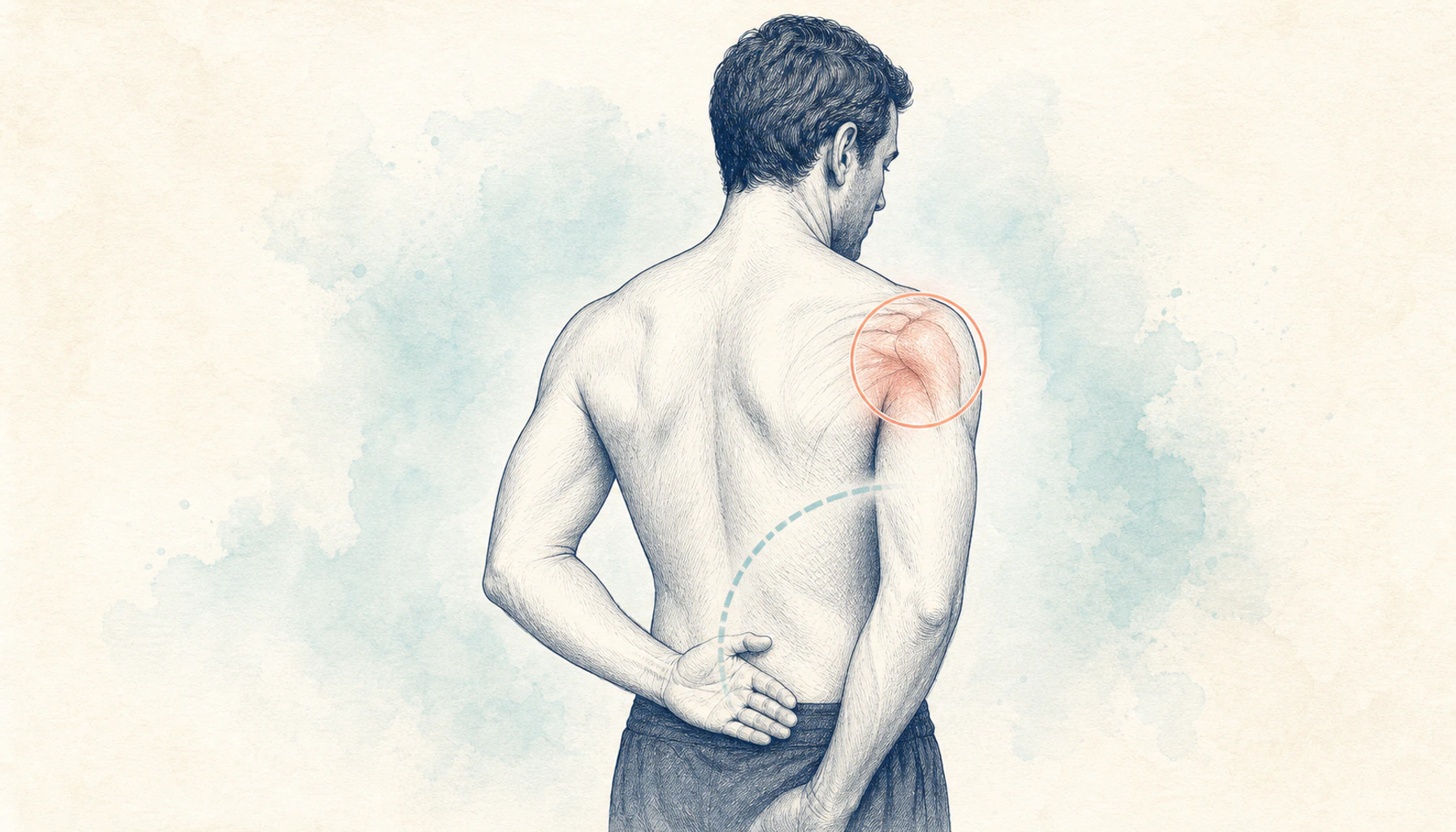
Frozen shoulder is a specific condition that causes shoulder pain and a pronounced loss of motion. The clearest clinical clue is restriction during both active movement, when you move your own arm, and passive movement, when a clinician gently moves it for you.
Many shoulder problems hurt during lifting or reaching. Rotator cuff problems may limit movement because the motion is painful or weak, while the joint can still have a larger passive range. Arthritis can also cause pain and stiffness, so an examination and sometimes an X-ray help separate these conditions.
Shoulder pain and frozen shoulder compared
| Feature | Frozen shoulder | Other common shoulder pain |
|---|---|---|
| How it starts | Often gradual, sometimes after injury, surgery, or immobilization | May be sudden after injury or gradual with overuse or joint change |
| Movement | Active and passive range both become restricted | Movement may be painful or weak while some passive range remains |
| Typical limits | Turning the arm outward and reaching overhead or behind the back become difficult | The limited direction depends on the tendon, muscle, bursa, or joint involved |
| Night symptoms | Night pain is common, especially in the painful stage | Rotator cuff and arthritis pain can also disturb sleep |
| Course | Usually progresses through painful, stiff, and recovery phases over months or years | Varies widely with the cause |
The movement clue clinicians look for
Frozen shoulder, also called adhesive capsulitis, involves tightening and inflammation of the capsule around the ball-and-socket joint. As the capsule becomes less flexible, shoulder motion decreases. External rotation, the motion used to turn the forearm away from the body while the elbow stays at the side, is often especially limited.
A clinician compares active and passive motion without forcing the joint. This distinction can be difficult to judge on your own because pain makes people guard the arm. RangeMaster's overview of frozen shoulder symptoms and recovery adds detail about the condition.
Frozen shoulder develops in stages
Freezing stage
Pain gradually increases and the shoulder begins losing motion. Sleep can become difficult. The American Academy of Orthopaedic Surgeons says this stage commonly lasts six weeks to nine months.
Frozen stage
Pain may ease while stiffness continues to interfere with dressing, grooming, reaching shelves, and other daily tasks. This stage may last four to six months.
Thawing stage
Motion returns gradually. Recovery time varies, and full improvement can take many months. The NHS notes that frozen shoulder can last for months or years.
Other conditions that can look similar
A rotator cuff tear can cause night pain, weakness, and difficulty raising the arm. Shoulder arthritis can produce a deep ache, grinding or clicking, and progressive stiffness. Pain traveling into the fingers with tingling or numbness raises concern for a nerve source. A clinician may check the neck and examine strength and sensation along with the shoulder.
Read about rotator cuff function, shoulder pain compared with arthritis, and common causes of nighttime shoulder pain to prepare for that discussion.
Movement tools fit a diagnosis-specific plan
Frozen shoulder care often includes pain management and gentle mobility work chosen for the current stage. The appropriate intensity changes as pain and stiffness change. A physical therapist can show you how far to move and how to avoid substituting with the shoulder blade or trunk.
If assisted elevation is part of your prescribed home program, the BlueRanger Shoulder Pulley can help the other arm guide the affected shoulder. The ShoulderWand can support clinician-directed assisted rotation and elevation. These products cannot diagnose frozen shoulder or replace an examination. Use them after a clinician confirms the movements and limits that fit your condition.
If your clinician has recommended an over-the-door pulley, compare Home Ranger, RangeMaster, and Vive shoulder pulleys by handle, attachment, and progress-marking features before choosing a setup.
The practical guide to moving a painful frozen shoulder shows how controlled motion differs from forceful stretching.
When to arrange an evaluation
See a healthcare professional when pain and stiffness do not improve, daily tasks become difficult, or the shoulder has steadily lost movement. Seek earlier care after trauma, with sudden weakness, or when numbness and tingling are present. A hot, red, swollen shoulder with fever needs urgent medical advice.
Questions people ask
How do I know if shoulder pain is frozen shoulder?
Frozen shoulder usually develops gradually and causes a major loss of movement. The shoulder stays restricted when you move it yourself and when another person gently moves it. A clinician should confirm the diagnosis.
Can you still move your arm with frozen shoulder?
Most people can still move the arm to some degree, but reaching overhead, rotating outward, and reaching behind the back become increasingly limited. The amount of restriction changes as the condition progresses.
Should you stretch a frozen shoulder through pain?
Forceful stretching can aggravate a painful shoulder. Use gentle movement within the range recommended by your clinician or physical therapist, and stop when an exercise causes sharp or escalating pain.
This article provides general education and cannot determine whether you have frozen shoulder. Read our medical disclaimer. A clinician can compare active and passive motion, evaluate strength, and decide whether imaging is useful.