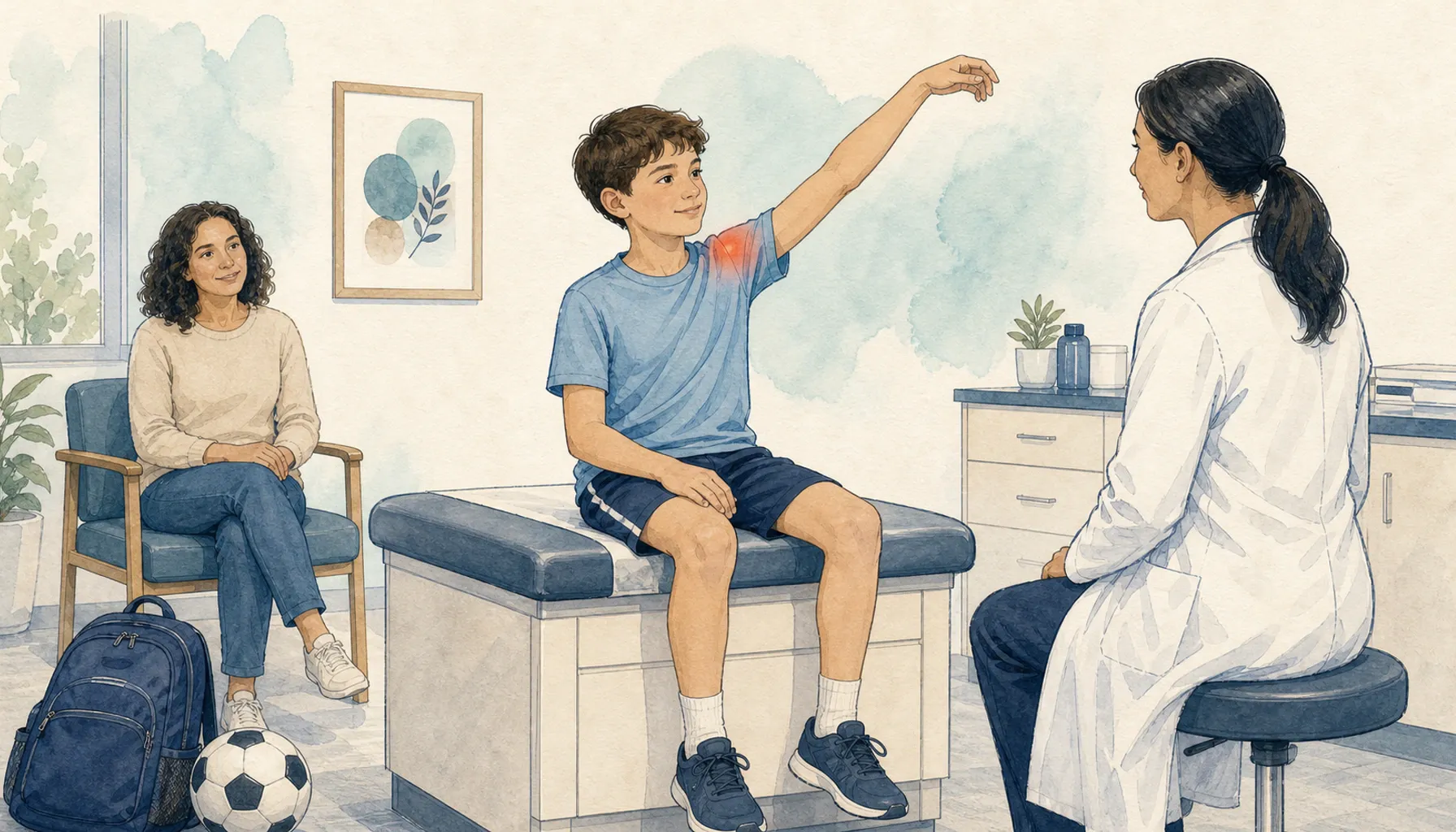
Shoulder pain in a 10-year-old should be discussed with a parent or caregiver and evaluated when it follows trauma, limits normal use, or persists. Children have open growth plates and different injury patterns from adults. A fall, direct hit, repeated throwing, swimming, gymnastics, or poorly fitted sports equipment can affect growing bone and soft tissue.
A child who cannot move the shoulder normally, has a deformity, or has severe pain needs urgent medical care. A pediatrician, pediatric sports medicine clinician, or pediatric orthopaedist can decide whether an X-ray or another test is needed.
Match the child's symptoms to the right level of care
| What you notice | Possible concern | What to do |
|---|---|---|
| Deformity or inability to move the shoulder after a fall | Fracture or dislocation | Seek emergency or urgent care now |
| Swelling, bruising, focal bone tenderness, or painful popping | Bone, joint, or growth plate injury | Arrange prompt medical evaluation |
| Numbness lasting more than one hour | A nerve or circulation problem needs assessment | Seek urgent medical advice |
| Pain during throwing, swimming, serving, or gymnastics | Overuse or growth plate stress | Stop the provoking sport and call the pediatrician |
| Pain with fever, redness, warmth, or a child who looks ill | Infection or inflammatory illness | Get urgent medical advice |
| Mild soreness that quickly improves and normal arm use | Minor muscle irritation may be possible | Monitor closely and contact the pediatrician if it returns |
Why growth plates change the evaluation
Growth plates are areas of tissue near the ends of a child's long bones. The National Institute of Arthritis and Musculoskeletal and Skin Diseases explains that these areas are weaker than nearby ligaments and tendons while a child is growing. A force that might sprain an adult can injure a child's growth plate.
Growth plate injuries can follow one event, such as a fall, or repeated stress. Persistent tenderness, warmth, swelling, deformity, or a change in how the child moves the arm deserves prompt care. Treatment helps protect future bone growth.
Sports and overuse are common clues
The American Academy of Pediatrics lists repeated overhead activity as a source of shoulder overuse injuries in young athletes. Throwing, swimming, racquet sports, and gymnastics can load the shoulder many times during practice. Training changes, technique, total repetitions, and equipment size all matter.
Ask the child when pain appears, where one finger points to the pain, and whether it affects sleep, dressing, carrying a backpack, writing, or play. Note any reduction in throwing speed, distance, accuracy, or willingness to use the arm. RangeMaster's guide to first steps after a shoulder injury offers general questions to bring to a visit.
What parents can do before the appointment
Stop the activity that causes pain and avoid testing the shoulder with repeated throws or lifts. Support the arm in a comfortable position. Follow the child's clinician for medicine and dosing advice because pediatric doses depend on the child's weight, medical history, and the exact product. The article on shoulder pain medicine safety provides general label guidance for adults and is not a pediatric dosing guide.
Adult shoulder rehabilitation routines may use resistance, range, and repetition levels that do not fit a 10-year-old. Wait for an examination before starting a program. A pediatric physical therapist can build a plan around the child's diagnosis and return-to-play requirements. RangeMaster's gentle shoulder exercise overview should be used for a child only when the treating clinician chooses those movements.
Using a wrap requires pediatric approval
If the child's clinician approves temperature therapy and confirms that an adult-sized wrap can fit safely, the Shoulder Compression Wrap can hold a hot or cold gel pack near the shoulder. It cannot diagnose or treat a fracture, growth plate injury, dislocation, infection, or other cause.
An adult should supervise every use, follow the product instructions, check the fit, protect the skin from direct temperature exposure, and monitor the child's skin and comfort. Stop immediately for increased pain, numbness, color change, skin irritation, or pressure. Do not use compression on a deformed shoulder or delay an examination to try the product.
When to get help
Seek emergency care when the shoulder looks deformed, a bone is visible, major bleeding will not stop, or the child cannot move the shoulder after a serious injury. Contact a clinician promptly for significant swelling, weakness, limited motion, painful popping, focal bone tenderness, worsening pain, or numbness lasting more than one hour.
Call the pediatrician when shoulder pain interferes with school, sleep, play, or sports, even when there was no single injury. Persistent or repeated symptoms can affect growing bone, cartilage, and soft tissue.
Questions people ask
When should a 10-year-old see a doctor for shoulder pain?
A child should be evaluated promptly after trauma, with swelling, weakness, deformity, painful popping, loss of normal movement, or numbness lasting more than one hour. Call the pediatrician when pain limits school or sports, persists, or keeps returning.
Can growing cause shoulder pain in a 10-year-old?
A growing child has open growth plates that can be injured by a fall or repeated overhead stress. Persistent shoulder pain should not be assumed to be growing pains, especially when one spot is tender or activity is limited.
Should a child do adult shoulder exercises?
A child should use exercises chosen for their diagnosis, growth stage, sport, and current function. A pediatric clinician or physical therapist can set safe movements, resistance, repetitions, and return-to-play goals.
This article provides general education and cannot diagnose a child's shoulder pain. Read our medical disclaimer. A parent or caregiver should contact a pediatric healthcare professional for advice based on the child's age, growth, symptoms, activities, and injury history.