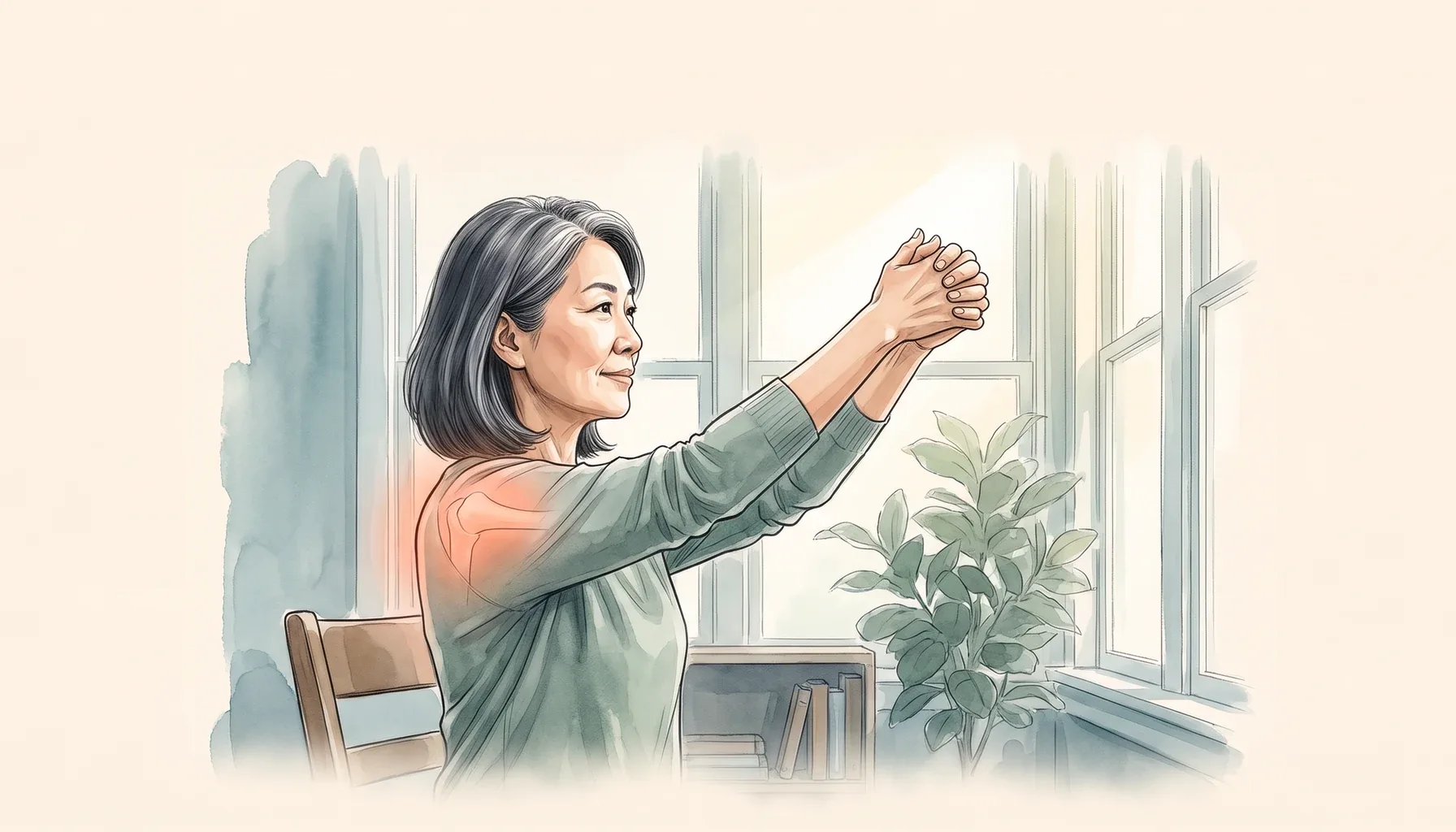
Breast cancer related lymphedema is swelling of the arm, hand or chest that can follow lymph node surgery or radiation. Research shows that exercise started slowly and built up gradually is safe for women at risk and for women who already have it. Gentle arm movement usually starts within days of surgery, and light strength work often begins 4 to 6 weeks later, once your care team gives the OK.
Key takeaways
- About 1 in 5 women develop arm lymphedema after breast cancer, and risk is highest after a full axillary lymph node dissection.
- Randomized trials found that slowly progressive weight lifting did not raise lymphedema risk and lowered flare-ups in women who already had it.
- The International Society of Lymphology says the evidence consistently supports exercise as safe for people with lymphedema.
- Early signs include heaviness, tightness and mild swelling, and early treatment makes lymphedema easier to control.
- Complete decongestive therapy, compression, skin care and weight management are the main parts of care if swelling develops.
For a shorter introduction, read our overview of breast cancer-related lymphedema.
What is breast cancer related lymphedema?
Lymphedema is swelling caused by a buildup of lymph fluid between the skin and muscle. After breast cancer, it most often affects the hand, arm or chest on the side where lymph nodes were removed or treated.
The lymph system is a network of vessels and lymph nodes that carries a clear fluid called lymph. The National Cancer Institute (NCI) explains that surgery can disrupt the flow of lymph fluid, and radiation therapy can cause scar tissue that blocks it.
NCI notes that lymphedema can appear soon after treatment or years later, and that it most often develops slowly over months or years. Once it develops, it is chronic, and it is easier to control when treatment starts early. Our post on the anatomy and stages of lymphedema explains more.
How common is lymphedema after breast cancer?
A large review estimated that more than 1 in 5 women develop arm lymphedema after breast cancer. Risk depends heavily on the type of lymph node surgery.
In a 2013 systematic review and meta-analysis in The Lancet Oncology, DiSipio and colleagues pooled 72 studies. The overall incidence was 16.6%, and it rose to 21.4% when the authors looked only at prospective cohort studies. Lymphedema seemed to increase for up to 2 years after diagnosis or surgery.
The type of surgery made a large difference. Incidence was 19.9% in women who had an axillary lymph node dissection, which removes many nodes from the underarm, and 5.6% in women who had a sentinel node biopsy, which removes only the first few nodes. That is about four times higher after a full dissection.
Who is most at risk?
The strongest risk factors are more extensive surgery and being overweight or having obesity. Radiation, infection and slow healing also play a role.
The DiSipio review found strong evidence for three surgical factors: axillary lymph node dissection, a greater number of lymph nodes removed, and mastectomy. It also found strong evidence for being overweight or obese. NCI also lists infection, slow healing and radiation.
Sentinel node biopsy removes fewer nodes, which NCI notes has lowered risk for many women. Our posts on risk factors for developing breast cancer-related lymphedema and lymphedema risk after sentinel node biopsy go deeper into the research.
What are the early signs and stages?
Early lymphedema often starts as a heavy, full or tight feeling in the arm before swelling is easy to see. Doctors use a stage scale from 0 to III to describe how advanced it is.
NCI lists these signs in the arm:
- A heavy, full or tight feeling in the arm, hand or fingers
- Swelling that makes one arm look larger than the other
- Difficulty moving the arm
- Weakness in the arm
- Numbness or tingling in the affected area
The 2020 consensus document of the International Society of Lymphology (ISL) describes the stages this way. Stage 0 is a latent stage with no visible swelling. In Stage I, swelling goes down when the arm is raised. In Stage II, raising the arm rarely reduces it. Stage III involves hard, thickened skin and severe swelling.
Can lymphedema be caught early?
Yes. Measuring the arm before surgery and checking it at regular visits afterward can find small changes early, when they respond well to treatment.
In a 2008 study, Stout Gergich and colleagues measured arm volume in 196 women before surgery and every 3 months after. Lymphedema was diagnosed when arm volume rose more than 3% above the starting measurement. It was found in 43 women, on average about 7 months after surgery. A compression garment worn for about 4 weeks reduced the swelling, and the reduction held at follow-up an average of 4.8 months later.
NCI notes that tools such as perometry and bioimpedance spectroscopy can measure the arm. Ask your team whether they take a baseline measurement before surgery.
Is exercise safe for breast cancer related lymphedema?
Yes. Randomized trials and reviews show that exercise started slowly and progressed gradually does not raise lymphedema risk or worsen existing lymphedema, and it improves strength and symptoms.
Weight lifting was long discouraged after breast cancer. The Physical Activity and Lymphedema (PAL) trials led by Schmitz and colleagues tested that advice.
In the 2009 PAL trial in the New England Journal of Medicine, 141 women with stable arm lymphedema were assigned by chance to twice weekly progressive weight lifting or to no exercise. The women who lifted wore a well-fitted compression garment while exercising. After 1 year, a swelling increase of 5% or more happened in 11% of the weight lifting group and 12% of the control group. Lymphedema flare-ups were 14% in the weight lifting group and 29% in the control group.
The 2010 PAL trial in JAMA studied 154 survivors who had at least 2 lymph nodes removed and no lymphedema. The program included 13 weeks of supervised instruction followed by 9 months on their own. New lymphedema developed in 11% of the weight lifting group and 17% of the control group. Among women with 5 or more nodes removed, the numbers were 7% and 22%.
Reviews agree. A Cochrane review by McNeely and colleagues pooled 24 trials with 2,132 participants and found that exercise improved shoulder range of motion. A 2020 meta-analysis by Hasenoehrl and colleagues reviewed 29 studies and concluded that resistance exercise does not have a systematic negative effect on lymphedema. The ISL consensus states that the evidence consistently supports exercise as safe and likely to improve symptoms, function and quality of life. Our post on whether exercise can raise lymphedema risk looks at these trials more closely.
Exercise after breast cancer surgery: a phase by phase guide
Exercise usually moves from gentle motion in the first days, to stretching, to strengthening from about 4 to 6 weeks. Your surgeon sets the timing.
Phase 1: the first days after surgery
The American Cancer Society (ACS) describes gentle movements for the first 3 to 7 days, once your team says it is OK. These include using the arm for daily tasks and raising your arms to shoulder height, or as high as you can without pulling on your drains.
ACS notes that some exercises should wait until drains and stitches are removed.
The UK PROSPER trial tested a physiotherapy-led program of stretching, strengthening and physical activity that started 7 to 10 days after surgery in 392 women at higher risk of arm problems. After 1 year, the exercise group had better arm function and less pain, with no increase in complications or lymphedema.
Phase 2: stretching in the following weeks
ACS says larger stretches, such as lifting the arm overhead or out to the side, usually start a week or more after surgery. It describes doing each exercise 5 to 7 times, twice a day, moving slowly until you feel a gentle stretch, with no bouncing or jerky movements.
The Cochrane review found that starting exercise early improved shoulder flexion in the short term. It also found that early exercise increased the amount and duration of wound drainage. That is one reason your surgeon decides when each stretch begins. Our post on when you can start arm exercises after mastectomy walks through these first weeks in more detail.
Phase 3: strength training from about 4 to 6 weeks
ACS says strength training usually begins about 4 to 6 weeks after surgery, starting with light weights. In a 2012 trial by Kilbreath and colleagues, 160 women started an 8-week program of stretching and progressive resistance training 4 to 6 weeks after surgery. The exercise group gained more shoulder flexion and abduction range and more shoulder abductor strength, and the authors reported that resistance training after surgery did not trigger lymphedema.
Long term: staying active for life
The international exercise guidelines for cancer survivors, published by Campbell and colleagues in 2019, concluded that exercise is generally safe for cancer survivors and that every survivor should avoid inactivity. They found that exercise can improve fatigue, anxiety, physical function and quality of life.
How to start a strength program safely
The trials that showed safety started light, progressed slowly and began with supervision.
- Start with light weights or resistance bands, and add load in small steps over weeks.
- Learn the program with a physical therapist or trained cancer exercise professional.
- Ask whether you should wear a compression sleeve during exercise, as the women with lymphedema did in the 2009 PAL trial.
- Pause and contact your team if you notice new heaviness, aching or swelling.
NCI describes a certified lymphedema therapist, or CLT, as a physical or occupational therapist trained to treat lymphedema. Ask your care team whether working with one makes sense for you.
How is lymphedema treated if it develops?
The main treatment is complete decongestive therapy, which combines manual lymphatic drainage, compression, exercise and skin care.
The ISL consensus describes complete decongestive therapy (CDT) as a two-phase program. The first phase reduces swelling with skin care, a light massage called manual lymphatic drainage (MLD), muscle pumping exercises and multilayer compression bandaging. The second phase begins right after and aims to hold the gains with a compression sleeve, skin care, continued exercise and MLD as needed. ISL notes that bandaging applied incorrectly can be harmful, so it should be done by trained staff.
A 2015 Cochrane review by Ezzo and colleagues found that MLD is safe and may add benefit to compression bandaging for swelling reduction. The trials were small, with 24 to 45 participants each.
Weight matters too. In a small randomized trial by Shaw and colleagues, dietary advice for weight loss significantly reduced arm volume after 12 weeks in 21 women with lymphedema.
NCI lists compression pumps and, for advanced lymphedema, surgical options such as lymphovenous bypass, lymph node transfer and liposuction. A 2020 clinical practice guideline from the Academy of Oncologic Physical Therapy grades these options for therapists. Our post on treatment of lymphedema explains each option in plain language.
Lymphedema and shoulder mobility
Lymphedema and shoulder stiffness often go together after breast cancer.
ACS notes that radiation can affect the arm and shoulder long after treatment ends, which makes regular exercise even more important. ACS suggests asking for therapy help if you do not have full use of your arm within 3 to 4 weeks after surgery. Our posts on shoulder dysfunction related to lymphedema and restricted shoulder mobility after radiation explain what to expect.
Shoulder pain can also come from common problems such as a rotator cuff tear. Our rotator cuff surgery recovery guide covers that recovery.
Daily habits that may lower risk
NCI says lymphedema cannot be prevented, and it lists several habits that may lower your risk or keep it from getting worse.
- Protect the skin on the affected arm. Wear gloves for gardening and cooking, and use lotion to prevent cracks.
- Stay active with an exercise program your doctor says is safe for you.
- Raise the arm above heart level when sitting or resting, if it is swollen.
- Stay at or work toward a healthy weight.
- Avoid pressure on the arm. Wear loose jewelry and sleeves, avoid carrying handbags on that side, and ask for blood pressure checks and blood draws on the other arm.
- Avoid extreme heat, stay hydrated and limit salt.
When to call your doctor
Contact your doctor promptly if you notice:
- New heaviness, fullness or tightness in the arm, hand, fingers or chest on the surgery side
- Swelling that makes one arm look larger than the other
- New difficulty moving the arm, or new weakness
Call your doctor right away if you have signs of cellulitis, a skin infection that NCI describes as potentially life-threatening and a common complication of lymphedema. Signs include pain, redness, swelling, warm skin and fever.
Talk with your clinician before you start or change an exercise program.
How RangeMaster products fit
Regular range-of-motion work at home is part of many programs after breast cancer surgery. The PinkPulley Cancer Care Shoulder Pulley is designed for gentle shoulder range-of-motion work, with a metal door bracket and a breast cancer patient guide. Use it only within the timing, range and precautions your care team gives you.
When your team clears you for light strengthening, the Cancer Recovery Strength and Mobility Kit (Pink) can help you move, stretch and strengthen at a slow, steady pace. It includes the PinkPulley, a ShoulderWand, the ShoulderFit Resistance Exerciser, a breast cancer patient guide and a storage bag.
Related reading
- Surgical options for breast cancer
- Research in a nutshell: lymphedema after treatment of breast cancer
Your next step
If your care team has cleared you for gentle range-of-motion work, the PinkPulley Cancer Care Shoulder Pulley can help you keep a steady home routine.
Common questions
What exercises are good for lymphedema after breast cancer?
Programs in the research include gentle range-of-motion work, stretching, light progressive resistance training and aerobic activity like walking. The ISL consensus also lists aquatic exercise, yoga and tai chi.
Can lifting weights make lymphedema worse?
In the PAL trials, slowly progressive weight lifting did not increase swelling or new lymphedema, and it lowered flare-ups in women who already had it.
How soon after surgery can I exercise my arm?
The American Cancer Society describes gentle movements in the first 3 to 7 days, larger stretches a week or more after surgery, and light strength training at about 4 to 6 weeks. Your surgeon sets your timing.
Does lymphedema go away on its own?
NCI describes lymphedema as a chronic condition once it develops. It is easier to control when treatment starts early, so report changes promptly.
Should I wear a compression sleeve when I exercise?
Women with lymphedema in the 2009 PAL trial wore a fitted compression garment while lifting. Ask your doctor or lymphedema therapist whether you need one and how it should fit.
Medical disclaimer
The information in this article is for general education only. It is not medical advice, diagnosis, or treatment, and reading it does not create a provider-patient relationship with RangeMaster. Recovery plans differ from person to person. Talk with your surgeon, physician, or physical therapist before you start, stop, or change any exercise, product, or treatment, and follow their instructions when they differ from anything you read here.
If you think you are having a medical emergency, call 911 or your local emergency number right away.
RangeMaster makes and sells the products linked in this article. Full medical disclaimer.
Sources
- DiSipio T, Rye S, Newman B, Hayes S. Incidence of unilateral arm lymphoedema after breast cancer: a systematic review and meta-analysis. Lancet Oncol. 2013;14(6):500-515. doi:10.1016/S1470-2045(13)70076-7 https://pubmed.ncbi.nlm.nih.gov/23540561/
- Executive Committee of the International Society of Lymphology. The diagnosis and treatment of peripheral lymphedema: 2020 Consensus Document of the International Society of Lymphology. Lymphology. 2020;53(1):3-19. doi:10.2458/lymph.4649 https://pubmed.ncbi.nlm.nih.gov/32521126/
- Stout Gergich NL, Pfalzer LA, McGarvey C, Springer B, Gerber LH, Soballe P. Preoperative assessment enables the early diagnosis and successful treatment of lymphedema. Cancer. 2008;112(12):2809-2819. doi:10.1002/cncr.23494 https://pubmed.ncbi.nlm.nih.gov/18428212/
- Schmitz KH, Ahmed RL, Troxel A, et al. Weight lifting in women with breast-cancer-related lymphedema. N Engl J Med. 2009;361(7):664-673. doi:10.1056/NEJMoa0810118 https://pubmed.ncbi.nlm.nih.gov/19675330/
- Schmitz KH, Ahmed RL, Troxel AB, et al. Weight lifting for women at risk for breast cancer-related lymphedema: a randomized trial. JAMA. 2010;304(24):2699-2705. doi:10.1001/jama.2010.1837 https://pubmed.ncbi.nlm.nih.gov/21148134/
- McNeely ML, Campbell K, Ospina M, et al. Exercise interventions for upper-limb dysfunction due to breast cancer treatment. Cochrane Database Syst Rev. 2010;(6):CD005211. doi:10.1002/14651858.CD005211.pub2 https://pubmed.ncbi.nlm.nih.gov/20556760/
- Hasenoehrl T, Palma S, Ramazanova D, et al. Resistance exercise and breast cancer-related lymphedema: a systematic review update and meta-analysis. Support Care Cancer. 2020;28(8):3593-3603. doi:10.1007/s00520-020-05521-x https://pubmed.ncbi.nlm.nih.gov/32415386/
- Bruce J, Mazuquin B, Canaway A, et al. Exercise versus usual care after non-reconstructive breast cancer surgery (UK PROSPER): multicentre randomised controlled trial and economic evaluation. BMJ. 2021;375:e066542. doi:10.1136/bmj-2021-066542 https://pubmed.ncbi.nlm.nih.gov/34759002/
- Kilbreath SL, Refshauge KM, Beith JM, et al. Upper limb progressive resistance training and stretching exercises following surgery for early breast cancer: a randomized controlled trial. Breast Cancer Res Treat. 2012;133(2):667-676. doi:10.1007/s10549-012-1964-1 https://pubmed.ncbi.nlm.nih.gov/22286332/
- Campbell KL, Winters-Stone KM, Wiskemann J, et al. Exercise guidelines for cancer survivors: consensus statement from international multidisciplinary roundtable. Med Sci Sports Exerc. 2019;51(11):2375-2390. doi:10.1249/MSS.0000000000002116 https://pubmed.ncbi.nlm.nih.gov/31626055/
- Ezzo J, Manheimer E, McNeely ML, et al. Manual lymphatic drainage for lymphedema following breast cancer treatment. Cochrane Database Syst Rev. 2015;(5):CD003475. doi:10.1002/14651858.CD003475.pub2 https://pubmed.ncbi.nlm.nih.gov/25994425/
- Shaw C, Mortimer P, Judd PA. A randomized controlled trial of weight reduction as a treatment for breast cancer-related lymphedema. Cancer. 2007;110(8):1868-1874. doi:10.1002/cncr.22994 https://pubmed.ncbi.nlm.nih.gov/17823909/
- Davies C, Levenhagen K, Ryans K, Perdomo M, Gilchrist L. Interventions for breast cancer-related lymphedema: clinical practice guideline from the Academy of Oncologic Physical Therapy of APTA. Phys Ther. 2020;100(7):1163-1179. doi:10.1093/ptj/pzaa087 https://pubmed.ncbi.nlm.nih.gov/32589208/
- National Cancer Institute. Lymphedema https://www.cancer.gov/about-cancer/treatment/side-effects/lymphedema
- American Cancer Society. Exercises After Breast Cancer Surgery https://www.cancer.org/cancer/types/breast-cancer/treatment/surgery-for-breast-cancer/exercises-after-breast-cancer-surgery.html