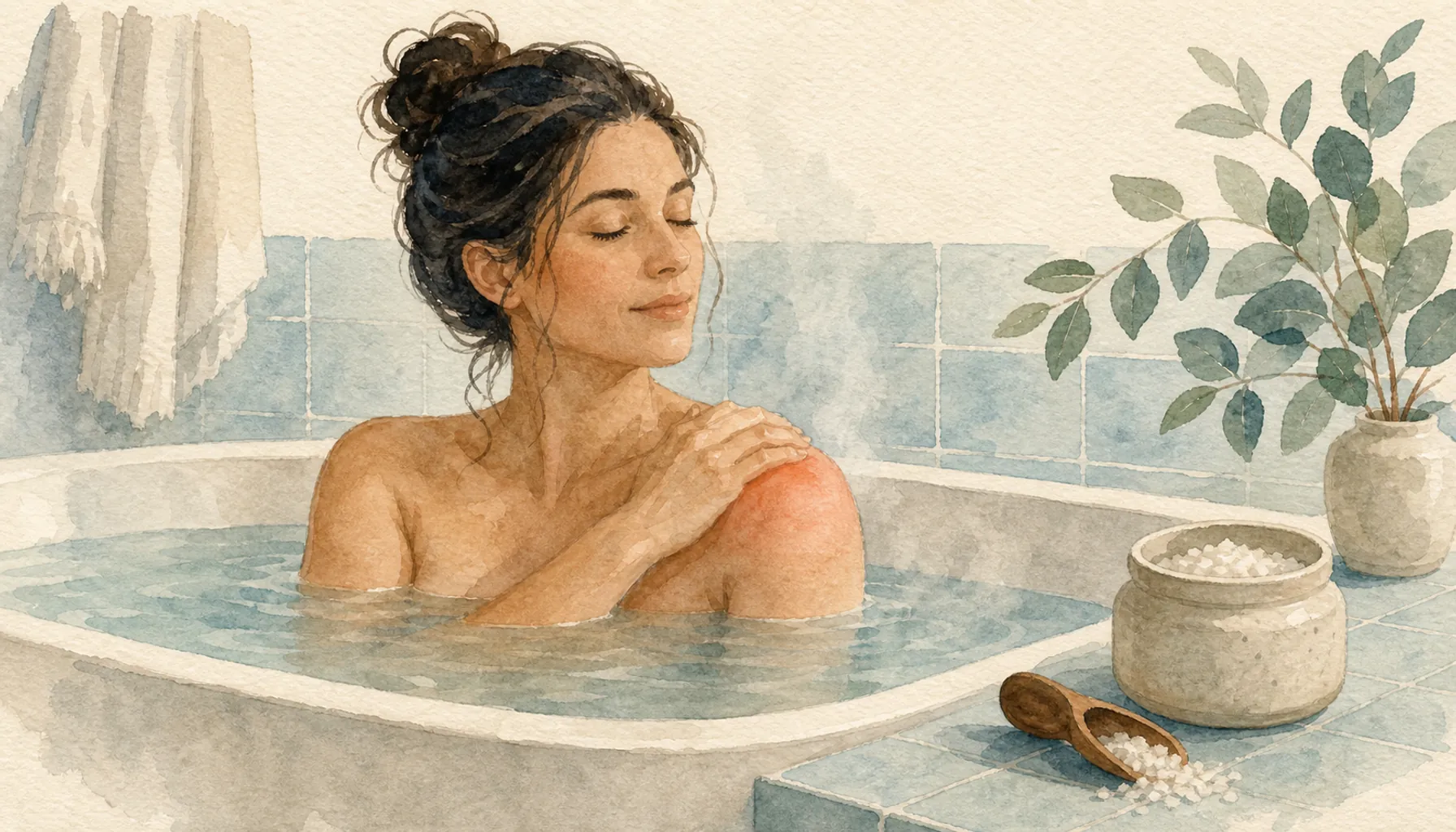
An Epsom salt bath may provide short-term comfort for a sore shoulder, but evidence that magnesium sulfate passes through the skin in a clinically meaningful amount or treats shoulder pain is limited. Warm water itself can feel relaxing and may ease muscle tension for a while.
Use a soak as a comfort measure after you have considered the cause and safety of heat. It cannot heal a tendon tear, treat arthritis, free a compressed nerve, or replace care for an injury or infection.
Epsom salt claims and current evidence
| Claim | What the evidence supports | Practical takeaway |
|---|---|---|
| Magnesium absorbs through the skin | Human evidence is limited and has not established meaningful absorption during bathing | Do not use a bath to correct magnesium deficiency |
| Epsom salt reduces shoulder inflammation | Direct clinical evidence for shoulder conditions is lacking | Do not replace diagnosis-specific treatment |
| A warm soak relaxes sore muscles | People may experience temporary warmth and relaxation | Judge comfort by your response and protect the skin |
| A bath heals structural damage | Bathing cannot repair tendon, bone, cartilage, or nerve injury | Seek evaluation for weakness, trauma, or persistent symptoms |
What is Epsom salt?
Epsom salt is magnesium sulfate, a compound that dissolves in water. It is commonly sold as a bath salt. The popular explanation is that magnesium enters the body through the skin and relaxes muscles or reduces inflammation.
A review published in Nutrients evaluated studies of transdermal magnesium and concluded that claims of effective absorption through healthy skin were scientifically unsupported by the available evidence. The skin is designed to limit entry of water-soluble substances. Small studies and laboratory work have not established that a routine Epsom salt bath delivers a therapeutic magnesium dose.
A pilot study of magnesium cream also found no significant overall rise in urinary magnesium and only limited subgroup findings. Cream is not the same exposure as a bath, but the study illustrates why confident absorption claims run ahead of the evidence.
Why a warm bath may still feel good
Warm water can create a comfortable environment, reduce guarding, and make a stiff area feel easier to move temporarily. The ritual may also help you relax. Relief after a soak does not reveal whether the pain came from muscle soreness, a tendon, arthritis, the neck, or another source.
The distinction in shoulder pain versus ordinary soreness can help you decide whether a new activity is a plausible trigger. If pain is linked to stiffness and progressive loss of motion, read shoulder pain versus frozen shoulder. Both conditions need a plan based on symptoms and examination rather than the response to a bath.
How to try a soak safely
Use a clean tub, comfortably warm water, and the amount listed on the product label. Keep the shoulder in an easy position. A bath that forces you to brace, reach, or push hard to get out can aggravate symptoms or create a fall risk. Have a stable way to enter and exit.
Stop if the skin burns, stings, becomes very red, or develops a rash. Get out if you feel dizzy, overheated, weak, nauseated, or short of breath. Avoid applying Epsom salt to an open wound unless a medical professional has given specific wound-care instructions.
People with reduced skin sensation, circulation problems, unstable blood pressure, significant heart or kidney disease, or difficulty getting safely out of a tub should ask a clinician whether a hot soak is appropriate. Do not drink bath Epsom salt. Products sold for different uses can have different directions and ingredients.
Other comfort options
If warmth helps but a bath is inconvenient, an approved warm pack may provide local comfort. Cold may be preferred after some acute aggravations. The guide to ice, heat, and compression explains general precautions and the importance of intact sensation.
A Shoulder Compression Wrap can hold its compatible hot or cold gel pack near the shoulder when temperature therapy is appropriate. It cannot treat the source of shoulder pain. Follow the instructions, use a skin barrier, check the skin often, and avoid compression or temperature therapy where sensation or circulation is reduced unless a clinician directs it.
Gentle movement may be useful for some types of shoulder pain, although forcing a painful range can make symptoms worse. Use these shoulder exercise examples as discussion points with a physical therapist who can choose a safe range and dose.
When shoulder pain needs care
Arrange an evaluation after a fall, with new weakness, major loss of motion, repeated night waking, or pain that continues despite sensible self-care. Fever, redness, warmth, or substantial swelling can indicate infection or another urgent problem. MedlinePlus recommends contacting a clinician when shoulder pain lasts longer than two to four weeks despite home treatment.
Call 911 for shoulder or arm discomfort with chest pressure, shortness of breath, sweating, dizziness, or nausea. A soak should never delay emergency care. Our article on whether shoulder pain will go away provides a timeline for deciding when watchful waiting has stopped being useful.
Common questions
Does Epsom salt reduce inflammation in the shoulder?
There is not good clinical evidence that Epsom salt absorbed through the skin treats shoulder inflammation. A warm bath may temporarily ease muscle tension or soreness, but that does not establish an anti-inflammatory effect from magnesium sulfate.
How long should you soak in Epsom salt for shoulder pain?
Follow the package directions and keep the water comfortably warm. Stop if you feel dizzy, overheated, weak, short of breath, or develop skin irritation. Ask a clinician first if you have open skin, reduced sensation, circulation concerns, or a condition affected by heat.
Can an Epsom salt bath heal a rotator cuff tear?
No. A bath cannot repair a torn tendon, reduce a dislocation, treat an infection, or correct nerve compression. New weakness, major motion loss, injury, fever, redness, swelling, or persistent pain needs medical evaluation.
This article provides general education and is not a diagnosis or treatment recommendation. Read our medical disclaimer. Ask a clinician whether bathing and heat are safe for your symptoms and health history.