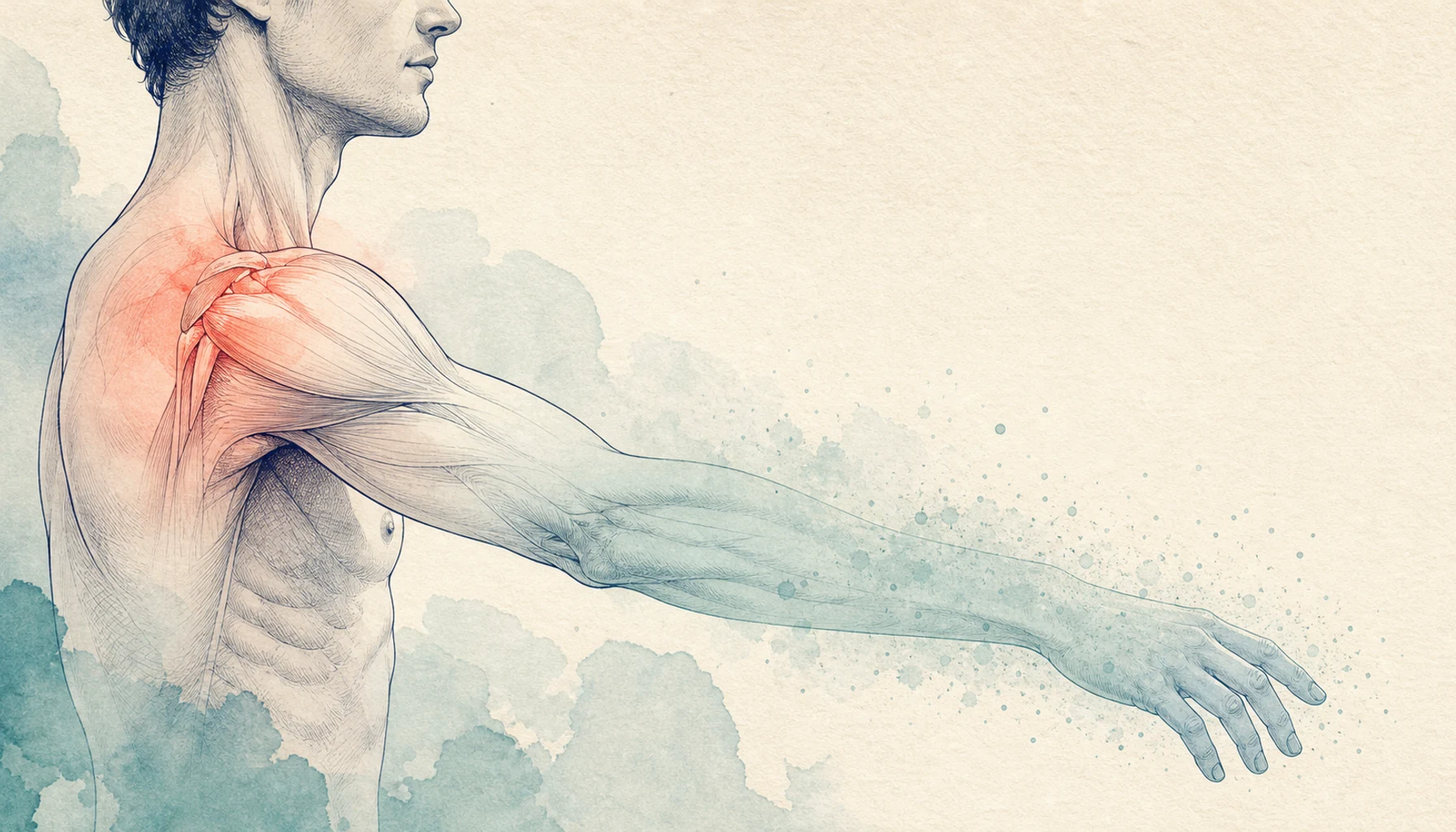
Shoulder pain with numbness in the arm commonly points to irritation or compression along a nerve pathway. A pinched nerve in the neck can send pain through the shoulder while reducing feeling in part of the arm or hand. Brachial plexus injury, a local nerve entrapment, trauma, and blood vessel compression are other possibilities.
Numbness means reduced or absent sensation. Pins and needles are a different sensation, and both can occur together. New numbness deserves attention because reduced feeling can make weakness or injury harder to notice.
How common patterns compare
| Pattern | Possible cause | Next step |
|---|---|---|
| Neck pain with burning shoulder and arm pain, numbness, or weakness | Cervical radiculopathy | Arrange a clinical neck and nerve examination |
| Symptoms after a fall, traction injury, dislocation, or operation | Brachial plexus or peripheral nerve injury | Seek prompt assessment, especially with weakness |
| Numbness with arm swelling, unusual coldness, or pale or blue color | Blood vessel or nerve compression | Get urgent medical advice |
| Sudden one-sided numbness with facial or speech changes | Possible stroke | Call 911 |
| Shoulder or arm discomfort with chest pressure or breathing difficulty | Possible heart attack | Call 911 |
Neck nerves can create shoulder and arm symptoms
Cervical radiculopathy occurs when a nerve is compressed or irritated where it leaves the neck. The American Academy of Orthopaedic Surgeons describes pain that often starts in the neck and travels down the arm. Numbness, finger tingling, and weakness in the shoulder, arm, or hand can accompany it.
Some neck movements may increase the pain. A clinician may test sensation, reflexes, grip, and specific muscle groups while examining the neck and shoulder. Read the direct comparison of shoulder pain and cervical radiculopathy for a closer look at these clues.
Brachial plexus and local nerve injuries
The brachial plexus runs from the lower neck through the upper shoulder and supplies movement and sensation to the arm and hand. MedlinePlus lists shoulder pain, numbness, tingling, and weakness among the symptoms of brachial plexopathy.
Trauma can stretch or compress this nerve network. Shoulder dislocation can also injure nerves. Get prompt care for numbness after a fall, collision, sudden pull, or visible shoulder deformity. RangeMaster's article on brachial plexus injury describes the evaluation and recovery process.
Circulation changes require quick attention
Thoracic outlet syndrome can compress nerves or blood vessels below the neck. Symptoms may include shoulder, neck, and arm pain with numbness or tingling. Blood vessel involvement can make the arm swell or tire easily and may make the hand pale, bluish, or sensitive to cold.
A sudden cold, pale, blue, or swollen arm needs urgent assessment. Severe pain or a weak pulse adds to the concern. Do not apply compression over an arm with unexplained numbness, swelling, or color change.
Safe steps before your appointment
Write down when the numbness began, which part of the arm is affected, and whether it comes and goes. Note any neck pain, finger symptoms, weakness, swelling, color change, injury, or recent procedure. The guides to pain traveling down the arm and shoulder pain with finger tingling can help you organize the symptom pattern.
A Shoulder Sleeper Pillow may support the arm in a comfortable sleeping position if your clinician says positioning is appropriate. It cannot restore sensation or diagnose or treat a nerve, circulation, or emergency cause. Avoid heat, ice, or compression over skin where sensation is reduced unless a clinician gives you specific instructions.
Pause any exercise that increases numbness, tingling, weakness, or radiating pain. A clinician or physical therapist can decide whether shoulder mobility work, neck treatment, a wrist or elbow strategy, or another plan fits the diagnosis.
When to seek urgent help
Call 911 for sudden numbness or weakness on one side of the body, especially with facial droop, trouble speaking, confusion, severe headache, dizziness, or loss of balance. Note the time symptoms began.
Call 911 for shoulder or arm symptoms with chest pressure, shortness of breath, cold sweat, nausea, or lightheadedness. Seek prompt care for progressive weakness, dropping objects, new loss of coordination, numbness after a major injury, or symptoms affecting both arms along with walking or bladder changes.
Questions people ask
Can shoulder pain cause arm numbness?
A shoulder-area injury can affect nearby nerves. Numbness often points toward a nerve or circulation problem that may begin in the neck, brachial plexus, elbow, or wrist. An examination can locate the likely source.
Is a numb arm an emergency?
Sudden one-sided arm numbness can be a stroke sign, especially with facial droop or speech trouble. Arm numbness with chest pressure, shortness of breath, sweating, or nausea can accompany a heart attack. Call 911 for either pattern.
Should I exercise a shoulder when my arm is numb?
Pause exercises that increase numbness, tingling, weakness, or electric pain. Ask a qualified clinician to assess new or persistent sensory loss and confirm which movements are appropriate.
This article provides general education and cannot diagnose the cause of shoulder pain or arm numbness. Read our medical disclaimer. Seek prompt care for new sensory loss or weakness, and use emergency services for possible stroke or heart attack symptoms.