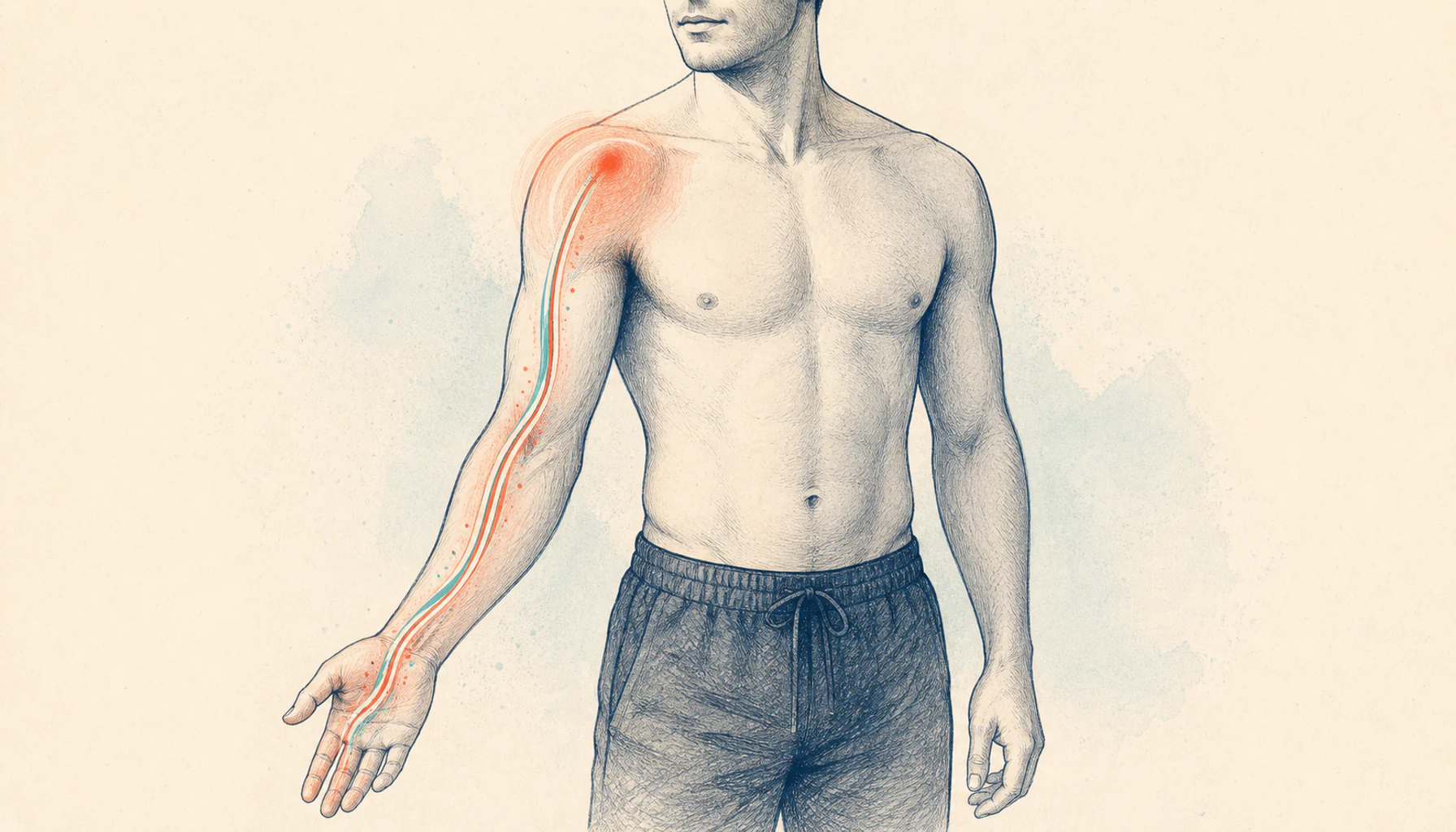
Yes, shoulder pain can travel down the arm. A rotator cuff problem may cause pain that moves from the shoulder into the upper arm. An irritated nerve in the neck can send pain farther down the arm and into the hand or fingers.
The pattern of pain offers useful clues. Movement-related pain, numbness, weakness, chest symptoms, and the way the pain started all help a clinician narrow down the cause.
Rotator cuff pain can move into the arm
The rotator cuff is a group of muscles and tendons that helps lift and rotate the arm. According to the American Academy of Orthopaedic Surgeons, a rotator cuff tear can cause shoulder pain that moves down the arm.
Other common rotator cuff symptoms include pain when lifting or lowering the arm, weakness during lifting or rotation, and pain at rest or at night. Lying on the affected shoulder may make it more noticeable.
A tear that happens during a fall or heavy lift may produce intense pain, a snapping sensation, and immediate upper-arm weakness. A tear that develops over time can begin with milder pain during overhead activity and gradually interfere with routine tasks.
A neck nerve can cause shoulder and arm pain
Nerves leave the cervical spine in the neck and travel through the shoulder into the arm and hand. Irritation or compression of one of these nerves is called cervical radiculopathy.
Neck-related arm pain may feel sharp, burning, or electric. It can come with pins and needles, numbness, or weakness. Symptoms may reach the hand, thumb, or fingers, depending on which nerve is involved.
A herniated disc in the neck is one possible source. Mayo Clinic notes that a cervical herniated disc can cause pain in the shoulder and arm along with radiating numbness, tingling, or weakness.
Clues to describe to a clinician
The same symptom can have several causes, so a clear description is useful. Keep track of:
- Whether the pain stops in the upper arm or reaches the hand and fingers
- Whether lifting, reaching, or rotating the shoulder changes the pain
- Whether neck movement changes the symptoms
- Any numbness, tingling, burning, or weakness
- Any fall, sudden pull, heavy lift, or other injury
- Whether pain wakes you at night or worsens when lying on one side
- Any chest pressure, breathing difficulty, sweating, nausea, or lightheadedness
A clinician may examine both the shoulder and the neck because pain from either area can spread into the arm.
When pain down the arm needs prompt evaluation
Contact a healthcare professional when arm pain is getting worse, continues despite basic care, or comes with numbness, tingling, or weakness. Mayo Clinic also recommends prompt assessment after a sudden injury, severe swelling, or difficulty moving the arm normally.
Immediate weakness after a fall, a visible change in the shape of the shoulder or arm, or an inability to use the arm can signal a serious injury. Seek urgent care and do not exercise through those symptoms.
Progressive weakness deserves attention even when the pain is mild. Nerve irritation and some rotator cuff tears can produce weakness that affects lifting, grip, or everyday tasks.
Shoulder and arm pain can be a heart warning sign
The American Heart Association lists pain or discomfort in one or both arms as a possible heart attack symptom. Pain may also occur in the shoulder, back, neck, jaw, or stomach.
Call 911 for shoulder or arm pain accompanied by:
- Pressure, squeezing, fullness, or pain in the center of the chest
- Shortness of breath with or without chest discomfort
- A cold sweat
- Nausea or vomiting
- Lightheadedness or unusual weakness
- A rapid or irregular heartbeat
Heart attacks can begin gradually with mild discomfort. Emergency medical services can begin assessment and treatment during transport.
Choosing the next step
Pain that changes with shoulder movement may point toward the joint, tendons, or surrounding muscles. Tingling, numbness, burning pain, or symptoms extending into the fingers can suggest nerve involvement. Those patterns guide the clinical examination and do not provide a diagnosis on their own.
RangeMaster has additional reading on the rotator cuff, neck-related shoulder pain, and shoulder pain at night. Follow a clinician's instructions before starting exercises after an injury, operation, or new episode of arm weakness.
This article is general education and is not a diagnosis or personal treatment plan. Read our medical disclaimer. Seek urgent care for a major injury, deformity, sudden loss of arm function, or new significant weakness. Call 911 for shoulder or arm pain with chest pressure, shortness of breath, sweating, nausea, or lightheadedness.