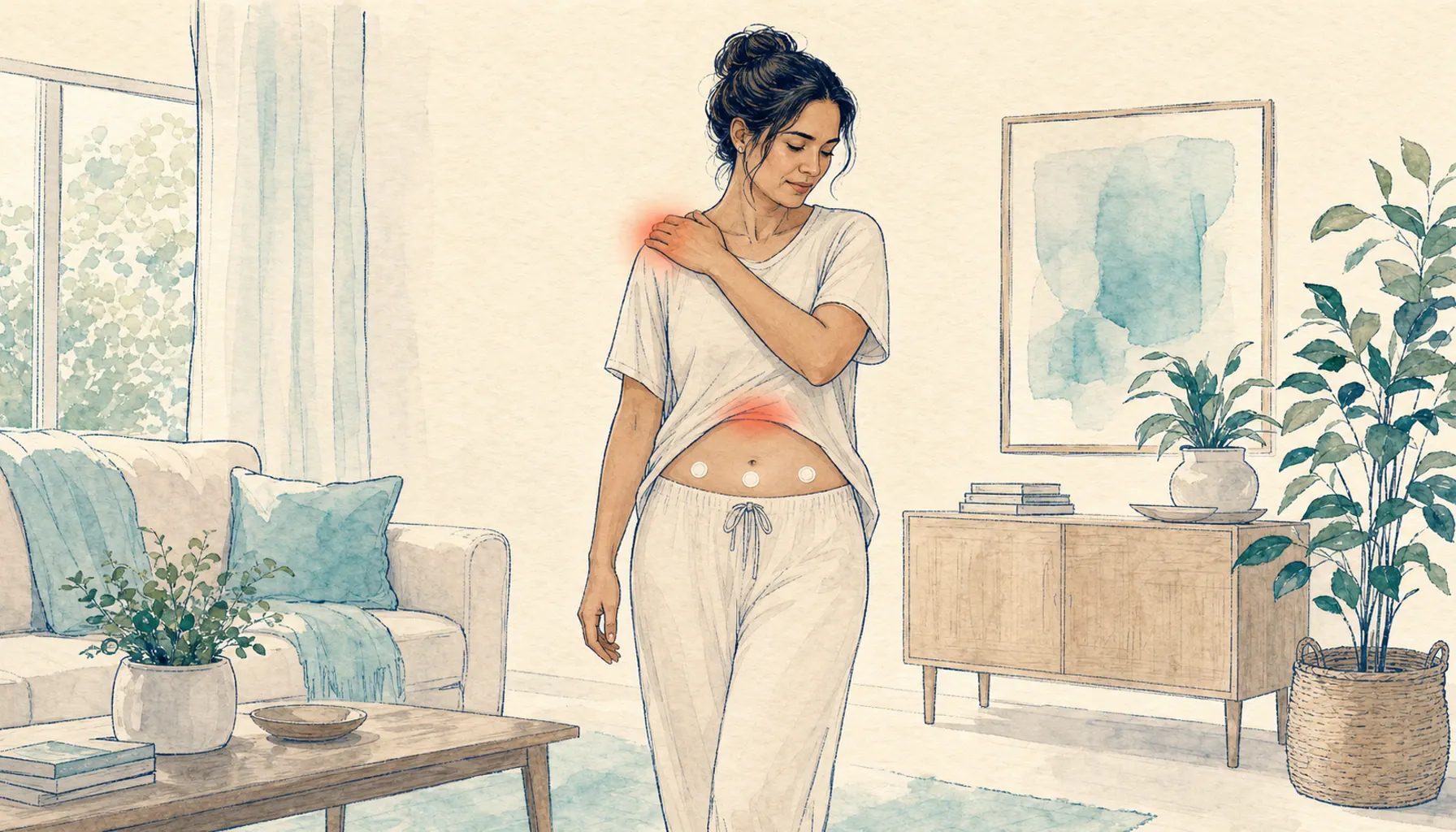
Mild shoulder-tip pain can still occur three days after laparoscopy, although gas-related discomfort should generally be easing. Carbon dioxide used to create working space in the abdomen can irritate the diaphragm. Shared nerve pathways can make that irritation feel like pain at one or both shoulder tips.
Call the surgical team when day-three pain is severe, worsening, or joined by breathing trouble, increasing abdominal pain, fever, repeated vomiting, abdominal swelling, wound redness, bleeding, or drainage. Chest pain or severe difficulty breathing requires emergency care.
Day-three symptoms: expected trend and warning signs
| Day-three pattern | What it may mean | Action |
|---|---|---|
| Mild shoulder-tip ache that is improving | Residual gas irritation may still be settling | Follow discharge instructions and keep monitoring |
| Pain remains unchanged or stronger than yesterday | Recovery is outside the expected trend | Call the surgical team for advice |
| Worsening abdominal pain, bloating, fever, or vomiting | A postoperative complication needs assessment | Seek urgent medical advice |
| Redness, swelling, pus, bleeding, or increasing pain at a wound | Wound complication or infection may be present | Contact the surgical team promptly |
| Chest pain, coughing blood, faintness, or breathing difficulty | A heart, lung, or blood clot emergency is possible | Use emergency services |
Why laparoscopy can hurt at the shoulder
During laparoscopy, the surgical team fills the abdomen with carbon dioxide so the surgeon can see and work around the organs. Most of the gas is released at the end. A remaining amount can irritate the diaphragm beneath the lungs.
The diaphragm and shoulder region share nerve pathways, so the brain can register discomfort at the shoulder tip. This is referred pain. The shoulder joint itself may move normally because the source is in the abdomen.
RangeMaster's article on referred shoulder pain after abdominal surgery explains the same nerve mechanism in the setting of a cesarean delivery. Your laparoscopy recovery plan remains the guide for your procedure.
How long the gas pain can last
Hospital guidance varies because procedures and patients differ. Hull University Teaching Hospitals says gas discomfort often settles within 24 to 48 hours and shoulder-tip pain should gradually become easier. Its diagnostic laparoscopy guidance notes that neck and shoulder pain can disappear after a couple of days. Other NHS hospital instructions say mild shoulder discomfort can last several days.
At day three, the direction of change is useful. Mild pain that is fading fits a common recovery pattern. Pain that is intensifying, limiting breathing, or arriving with other new symptoms deserves a call to the surgeon or after-hours service.
What to do at home
Follow the written discharge instructions because activity and medication advice depends on the operation performed. The NHS encourages movement after laparoscopy, and gentle walking can also reduce immobility risks. Stay within the limits set by the surgical team.
Take medication exactly as directed. Do not add an over-the-counter medicine without checking the discharge paperwork or asking a clinician or pharmacist, especially if you take blood thinners or have kidney, liver, stomach, pregnancy, or bleeding considerations. RangeMaster's medicine safety overview explains common label cautions.
Read what to do with new shoulder symptoms after surgery if the pain began during a transfer, lift, or fall and clearly changes with arm movement.
Positioning support has a limited role
If your surgeon approves sleeping with the upper body raised, a Shoulder Sleeper Wedge Pillow can support that approved position. It cannot remove surgical gas, treat referred pain, or address a postoperative complication. Follow the surgeon's positioning and incision precautions, and stop any setup that increases abdominal, chest, shoulder, or breathing symptoms.
A pillow should never delay contact with the surgical team when pain is worsening or other warning signs appear.
When to call and when to use emergency care
Contact the surgical team urgently for a high temperature, chills, severe or continuous vomiting, worsening abdominal pain, increasing bloating, unusual bleeding, foul discharge, or wound redness, swelling, bleeding, or pus. Pain and swelling in one leg or coughing blood also require urgent assessment.
Call emergency services for chest pain, a very fast heartbeat, fainting, or severe difficulty breathing. If you are unsure which number to use, the discharge paperwork usually lists the ward, surgeon, or after-hours line.
Questions people ask
Is shoulder pain normal three days after laparoscopy?
Mild shoulder-tip pain can remain on day three because carbon dioxide used during surgery can irritate the diaphragm. The overall trend should generally be toward improvement.
How long does gas-related shoulder pain last after laparoscopy?
Many hospital instructions describe improvement within one or two days, while some note that mild shoulder-tip pain can last several days. Your procedure and discharge instructions set the best expectation for you.
When should I call my surgeon about shoulder pain?
Contact the surgical team for pain that is severe, worsening, or not relieved as expected, especially with worsening abdominal pain, fever, vomiting, bloating, wound redness or drainage, leg swelling, chest pain, or breathing difficulty.
This article provides general education and cannot assess recovery after surgery. Read our medical disclaimer. Follow your discharge instructions and contact your surgical team when symptoms are worsening, unexpected, or concerning.