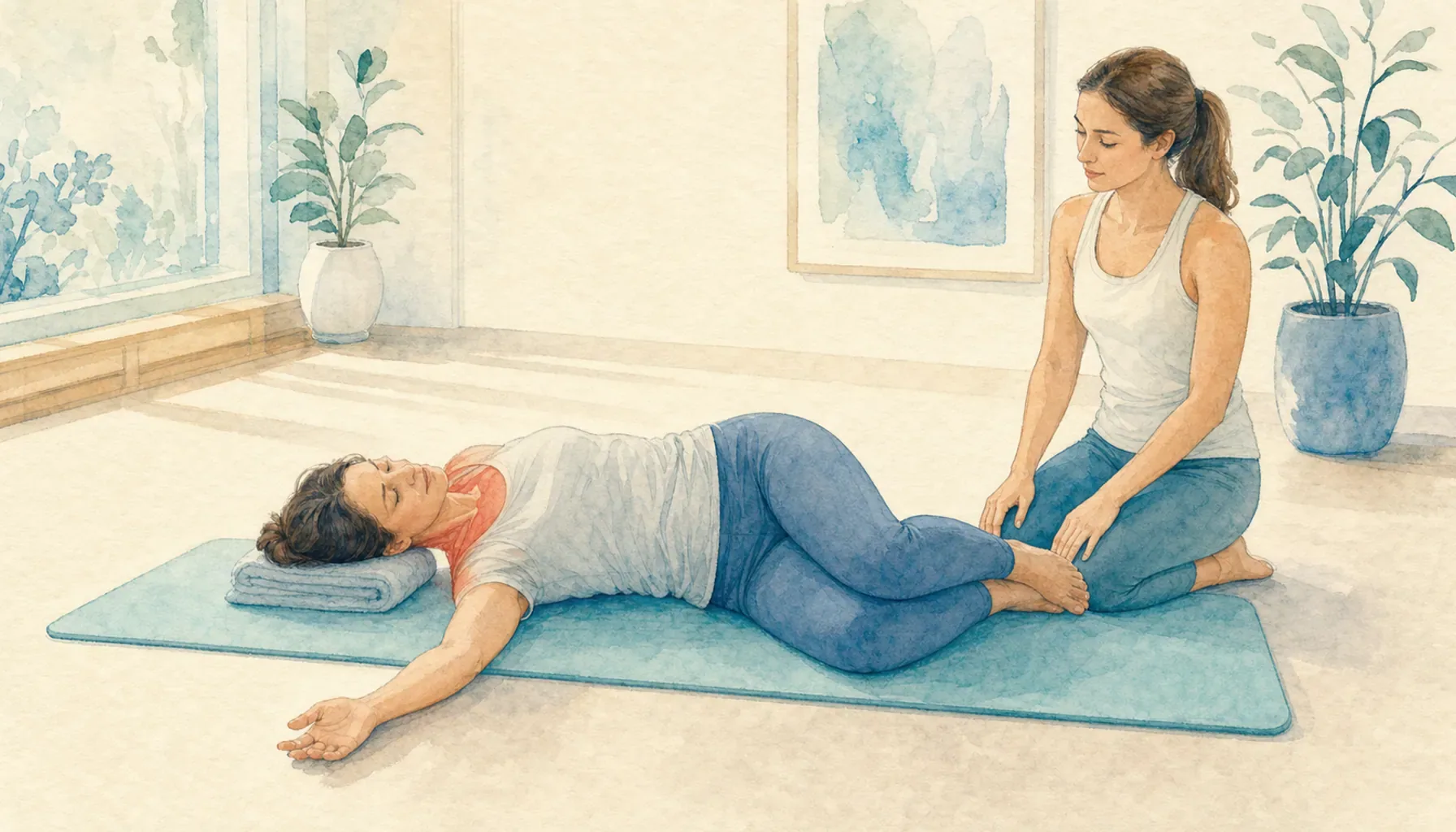
Pilates can help some people with ongoing neck and shoulder pain when the exercises are matched to the diagnosis, current strength, and comfortable range of motion. Research supports exercise as a useful option for many cases of chronic nonspecific neck pain, while evidence does not identify Pilates as consistently better than other appropriate exercise. Start with a qualified instructor or physical therapist if pain is persistent, travels into the arm, or limits normal movement.
Pilates usually combines breathing, trunk control, posture awareness, and precise movement. Those features can make it a practical way to rebuild tolerance. A class designed for healthy participants may include planks, side support, overhead arm work, or loaded shoulder positions that need modification during a painful period.
Match Pilates to the symptom pattern
| Symptom pattern | Possible starting approach | What to avoid until assessed |
|---|---|---|
| General neck and upper shoulder tightness | Breathing, gentle trunk control, short comfortable sessions | Repeated movements that steadily increase pain |
| Sore muscles after new activity | Lower resistance and allow recovery | Training the same painful area hard every day |
| Pain with arm weight-bearing | Supported or seated variations | Planks, push-ups, and long side-support holds |
| Tingling or numbness into the hand | Clinical assessment before class progression | Positions that reproduce spreading symptoms |
| Recent injury, surgery, or instability | Procedure-specific rehabilitation clearance | Generic classes and unrestricted overhead load |
What the research says
A 2025 systematic review and meta-analysis included eight studies and 439 participants with chronic neck pain. Pilates improved some pain and disability outcomes compared with control conditions, but other exercise sometimes performed as well or slightly better. The authors rated the certainty of evidence as low to moderate and noted substantial differences among the studies.
An earlier 2022 review found low-certainty evidence and no clear advantage over other treatments at three months. A network meta-analysis of 40 randomized trials found that several exercise categories, including mind-body exercise such as Pilates, could help chronic nonspecific neck pain compared with no treatment.
That makes consistency, correct dosage, and a tolerable program important. Our guide to choosing exercise for shoulder pain explains why the diagnosis changes the movement plan. If you are deciding whether you have training discomfort or a pain flare, see shoulder pain vs soreness.
A practical first session
Tell the instructor where the symptoms begin, whether they spread, and which movements are limited. Ask for a version that keeps your neck comfortable and lets the shoulder blades move without shrugging. Begin with a short session and low resistance. Smooth breathing and control matter more than reaching a large range.
Supported arm slides, small shoulder blade movements, and trunk exercises with the arms resting can be reasonable starting ideas when a clinician has approved movement. Keep the effort easy enough that you can observe your response. Check how you feel during the session, later that day, and the next morning.
Muscle fatigue may feel broad and achy. Sharp joint pain, catching, a sense of slipping, or electrical symptoms into the arm are different signals. The article on shoulder pain with hand tingling covers reasons to have nerve symptoms examined. Symptoms driven by neck movement may fit the pattern described in shoulder pain vs cervical radiculopathy.
Using resistance in a Pilates-based plan
Resistance is often added after basic motion and control are comfortable. If a physical therapist has prescribed low-load shoulder strengthening, the ShoulderFit Resistance Exerciser can support the exact resistance, direction, and repetitions in that plan. It is not a Pilates reformer and cannot identify the cause of neck or shoulder pain.
Do not add resistance because an exercise feels easy on the first day. Tendons and irritated joints can respond several hours later. Increase one variable at a time, such as repetitions, range, or resistance, and follow the limits your clinician provides.
When Pilates should wait
Get assessed before starting when pain followed a fall, the shoulder looks deformed, you cannot raise the arm, or weakness appeared suddenly. Recent surgery, fracture, dislocation, and known instability require clearance from the treating team. Fever, a hot swollen joint, or feeling seriously unwell also needs medical care.
Seek urgent help for neck or shoulder pain with new trouble walking, loss of bladder or bowel control, numbness in both arms or legs, severe headache, fainting, chest pressure, or shortness of breath. Exercise is not an appropriate test for those symptoms.
If a few carefully modified sessions repeatedly leave you worse, pause and have the plan reviewed. The answer may be a smaller dose, another exercise style, or treatment for a condition that first needs diagnosis. Our overview of whether shoulder pain will go away can help you decide when self-care has gone on long enough.
Common questions
Can Pilates help neck and shoulder pain?
Pilates may reduce pain and improve function for some people with chronic nonspecific neck pain. Research has not shown that it is consistently superior to other well-designed exercise, so the best program is one that fits your diagnosis and can be performed regularly.
Which Pilates exercises are safest for shoulder pain?
Breathing, gentle trunk control, supported arm movement, and low-load shoulder blade exercises are common starting points. The right choice depends on the cause of pain. A physical therapist or qualified instructor can modify weight-bearing and overhead work.
Should I stop Pilates if my shoulder hurts?
Stop an exercise that causes sharp pain, spreading tingling, numbness, new weakness, dizziness, or a sense that the shoulder is slipping. Mild muscle effort may be expected, but symptoms that build during class or remain worse afterward call for a modification and possibly an evaluation.
This article provides general education and is not a diagnosis or exercise prescription. Read our medical disclaimer. A qualified clinician can identify the pain source and set appropriate movement, load, and stopping rules.
Sources
- Journal of Bodywork and Movement Therapies: Pilates for Chronic Neck Pain Systematic Review
- Disability and Rehabilitation: Pilates for Neck Pain Systematic Review
- British Journal of Sports Medicine: Exercise Treatments for Chronic Nonspecific Neck Pain
- Physical Therapy: Exercise Type and Dose for Chronic Nonspecific Neck Pain