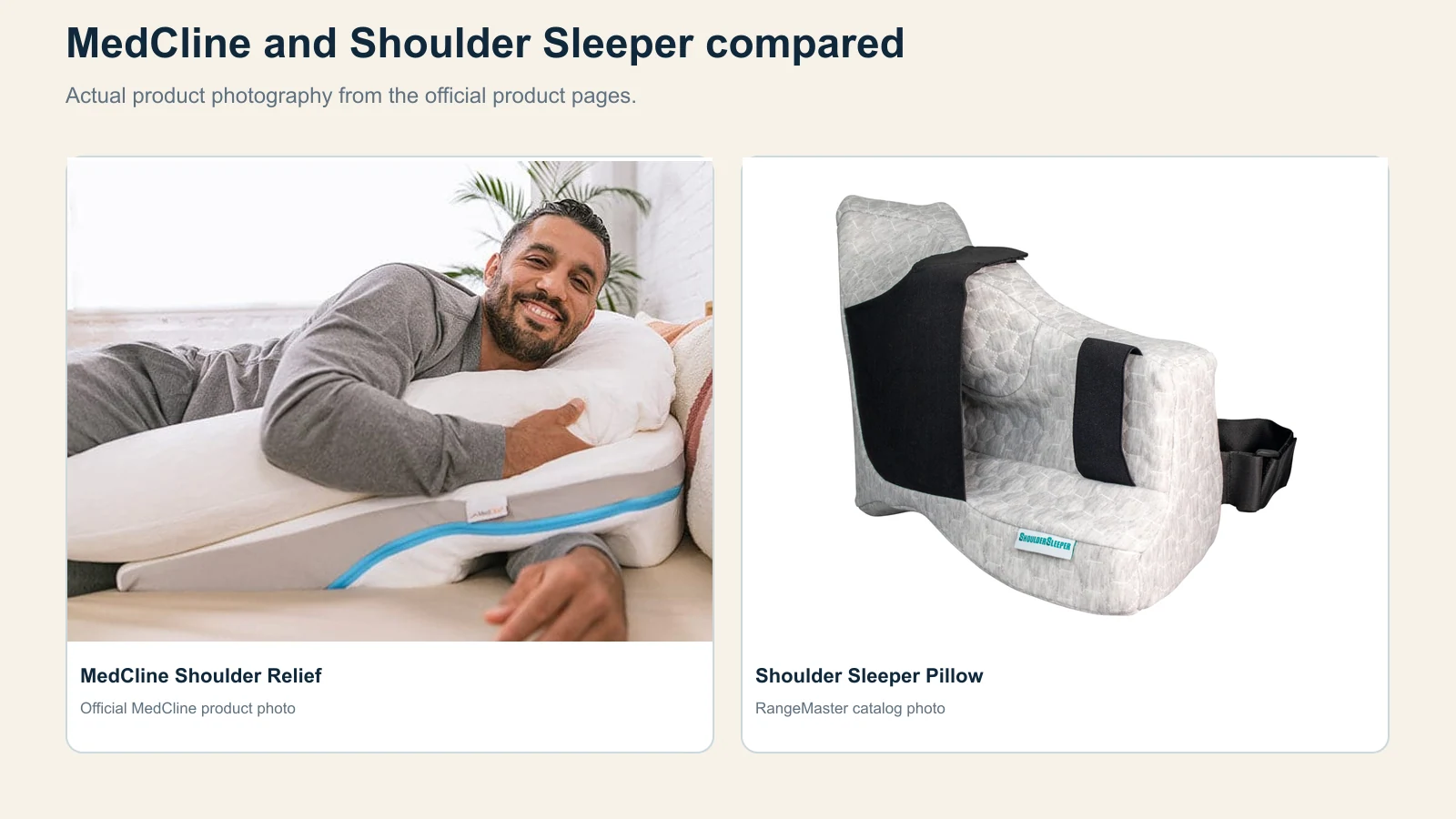
Choose MedCline when you want a three-piece, 10-degree incline system with an arm pocket and the option to lie on either side. Choose Shoulder Sleeper when you want compact, side-specific support that steadies the arm with waist, arm, and wrist straps. After surgery, the better choice is the one that fits the sleep and sling instructions from your surgical team.
| Decision point | MedCline Shoulder Relief System | Shoulder Sleeper Pillow |
|---|---|---|
| Support approach | Upper-body wedge, insert pillow, and adjustable body pillow | Contoured arm-support pillow with waist, arm, and wrist straps |
| Incline | Fixed 10-degree wedge | No whole-body incline |
| Side choice | Symmetrical wedge supports left- or right-side use | Choose Left or Right for the hurt shoulder |
| Size choice | Small/Medium or Large by height | Small or Large by height and arm measurements |
| Current listed price | $249.99 | $159.99 |
| Best fit | A full incline and side-sleeping system | Targeted arm positioning with a smaller footprint |
Disclosure and method: RangeMaster sells the Shoulder Sleeper products linked below. We compared official product specifications, sizing, included components, positioning approach, and current U.S. prices without conducting independent sleep or medical-outcome testing. Price, availability, sizing, and promotions were checked on official U.S. product pages July 22, 2026 and may change.
How do MedCline and Shoulder Sleeper support the shoulder differently?
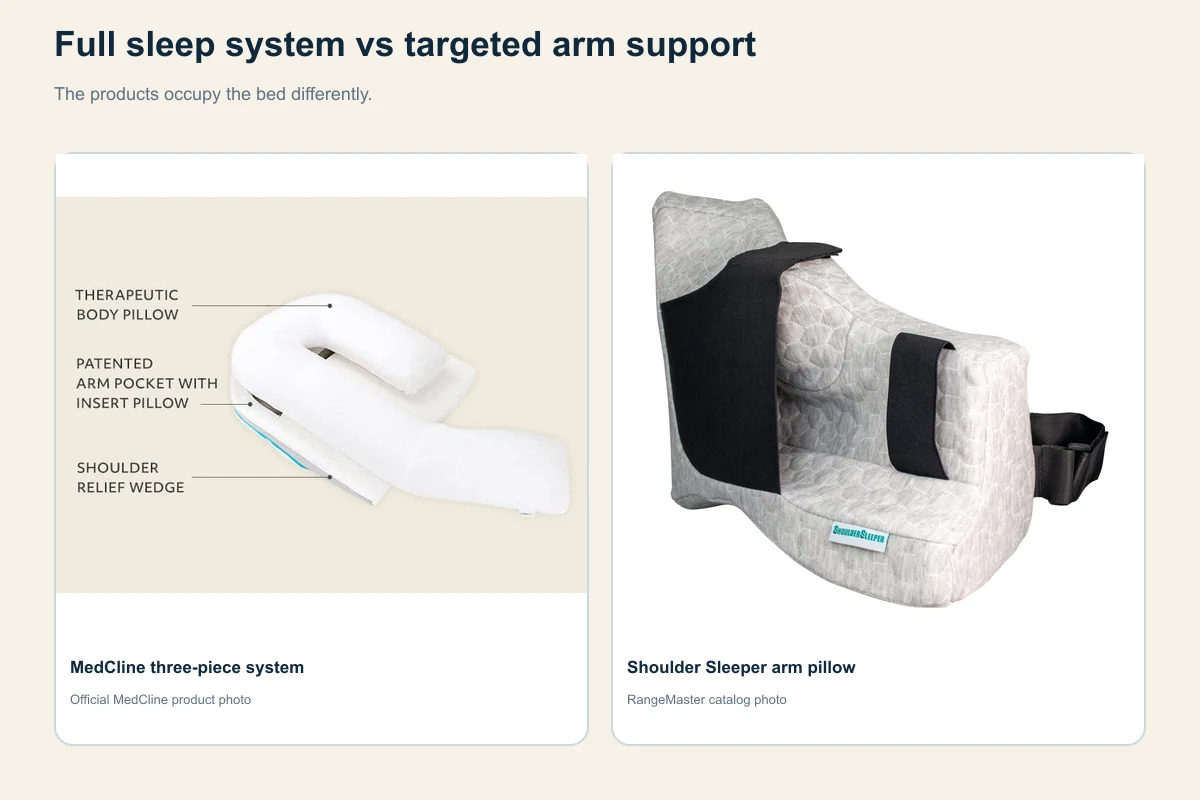
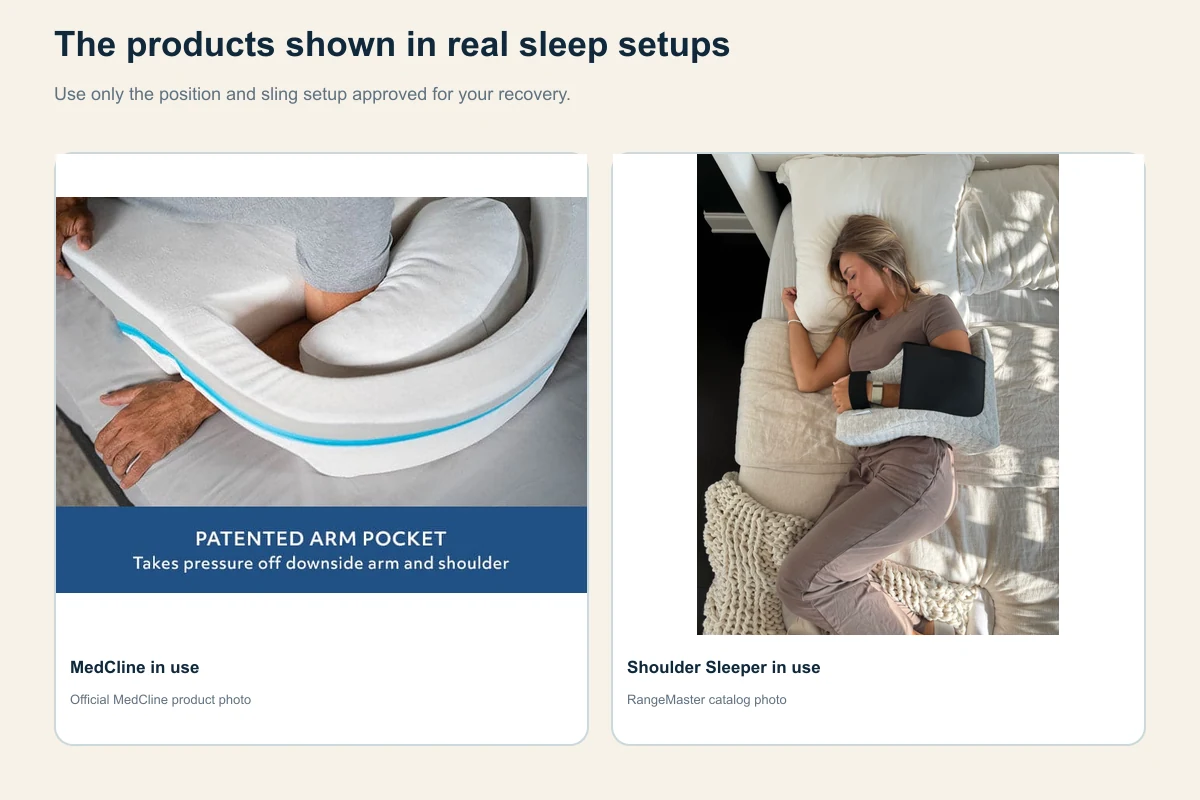
MedCline changes the position of much of the upper body. Its official product page describes a three-piece system: a Shoulder Relief Wedge, Therapeutic Body Pillow, and Insert Pillow. The wedge raises the upper body 10 degrees and includes an arm pocket intended to reduce pressure on the downside arm. Its symmetrical design permits either left- or right-side use, while the body pillow uses adjustable fill.
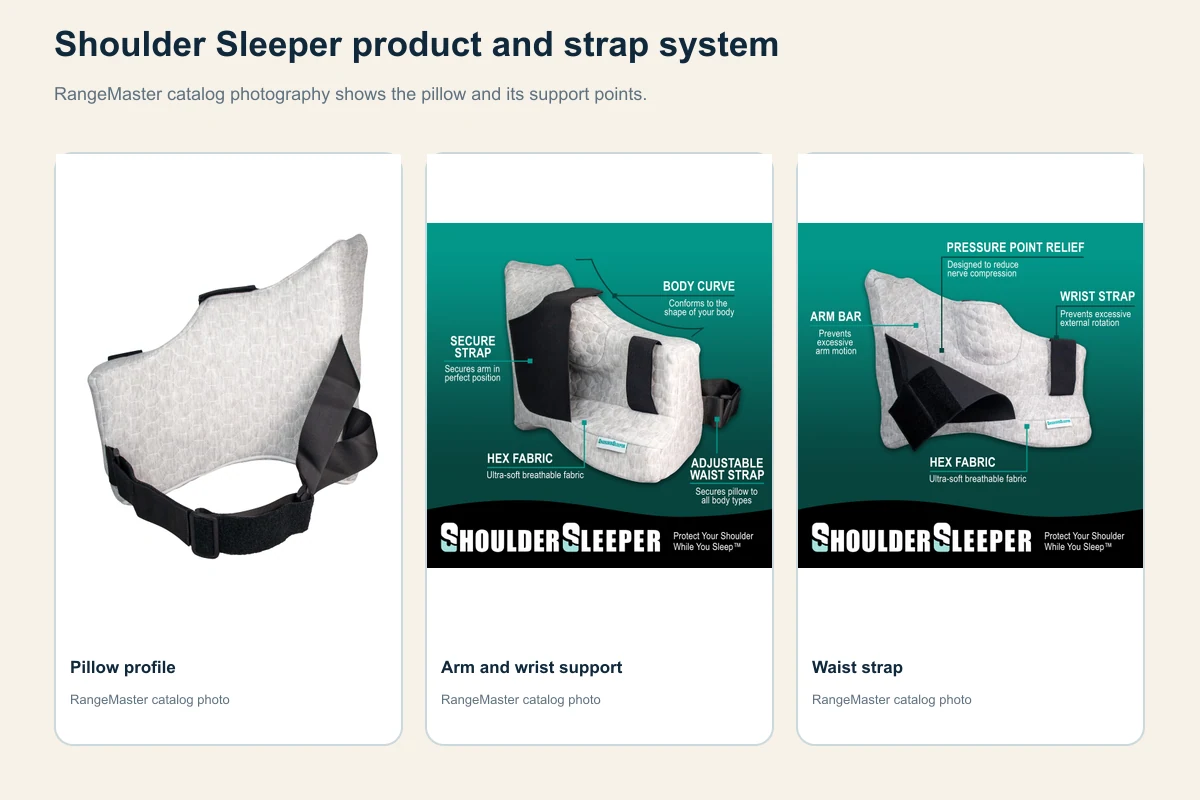
Shoulder Sleeper focuses on the recovering arm instead of elevating the torso. The Shoulder Sleeper Pillow uses a waist strap, arm strap, and wrist strap with medical-grade foam and a removable machine-washable cover. It is sold by hurt side and size. That makes it a more targeted option, but it does not provide MedCline's incline or downside-arm pocket.
Which system fits your bed and sleep position?
MedCline takes up more bed space because the wedge and body pillow work together. That larger footprint may be worthwhile if an approved incline and whole-body side-sleeping setup are the goal. Shoulder Sleeper stays close to the torso and arm, which can make it easier to place in a smaller bed or travel with it.
Neither product makes every sleep position appropriate after an operation. University Hospital Southampton advises many rotator cuff repair patients to wear the sling at night for the first five to six weeks, support the upper arm when lying on the back, and avoid the operated side for six weeks. Massachusetts General Hospital's shoulder arthroplasty protocol likewise uses a sling at night in early phases and places a small pillow or towel roll under the elbow while lying on the back. Your own procedure may have different rules.
How do you choose the correct Shoulder Sleeper side and size?
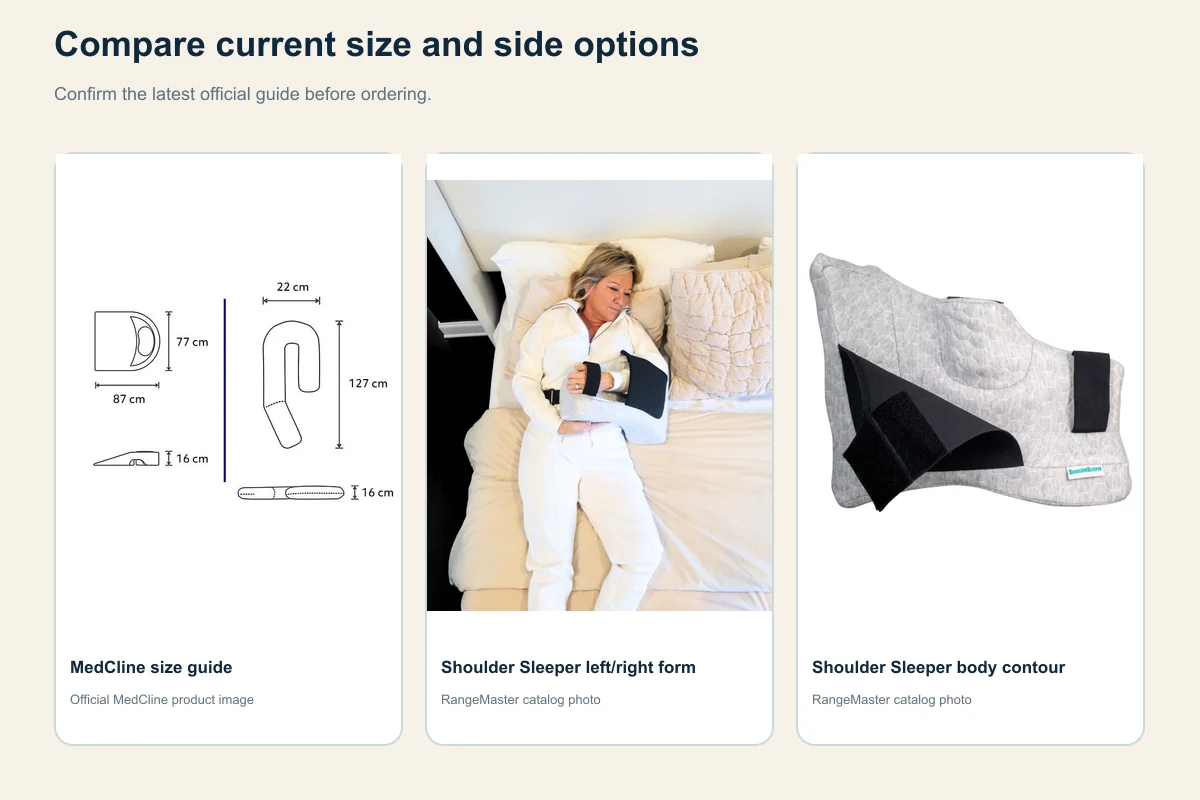
Choose the Left or Right option for the shoulder that needs support, not the side of the bed. The official Shoulder Sleeper sizing guide checked for this comparison directs people 6 feet or taller to Large and people 5 feet 11 inches or shorter to Small. For someone shorter than 5 feet, it recommends using the armpit-to-elbow measurement or contacting support. Check the current guide before ordering because sizing instructions can be revised.
MedCline also uses height to select Small/Medium or Large, with instructions to round down if between heights. Unlike Shoulder Sleeper, the MedCline wedge is symmetrical, so there is no separate hurt-side selection.
Is Shoulder Sleeper a practical MedCline alternative?
It is a practical alternative when the job is targeted arm positioning and a full incline system is unnecessary. It is also the lower-priced product based on the official U.S. prices checked for this article. It is not an equivalent substitute if the feature you need is MedCline's 10-degree wedge, arm pocket, or bilateral side-sleeping arrangement.
If your clinician specifically wants adjustable upper-body elevation, compare the Shoulder Sleeper Wedge Pillow. It uses two stackable incline wedges, a knee wedge, and a headrest pillow, so it is closer to a whole-position support system than the arm pillow alone. If daytime sling pressure is the concern, SlingThing v2 is an adapter for many existing sling setups, not a nighttime positioning pillow.
For a broader look at pillow height and shoulder support, read our guide to the best pillow features for side sleepers with neck and shoulder pain. Our article on why shoulder pain gets worse at night explains common symptom patterns without assuming that sleep position is the only cause.
What should you ask before using either product after surgery?
Ask whether you must sleep in a sling, whether back or opposite-side sleeping is permitted, how far the arm may move from the body, and whether incline is recommended. Our guide to shoulder pain eight weeks after rotator cuff surgery explains why healing stage and procedure details change the plan. The comparison of sling versus no sling after shoulder surgery also shows why generic timelines should not override the surgeon's protocol.
How this comparison was prepared
RangeMaster sells the Shoulder Sleeper products and SlingThing linked in this article. That commercial relationship may influence our perspective. We compared publicly listed specifications, sizing, included components, positioning approach, and current U.S. prices from official product pages. We did not conduct independent sleep testing or compare medical outcomes. Competitor strengths are included where the published specifications support them.
Questions people ask before choosing
Is MedCline or Shoulder Sleeper better after shoulder surgery?
MedCline may fit someone whose approved position calls for a 10-degree upper-body incline and room to sleep on either side. Shoulder Sleeper may fit someone who wants compact, side-specific arm support with waist, arm, and wrist straps. Your surgeon or physical therapist should approve the position.
Is Shoulder Sleeper a lower-cost MedCline alternative?
It can be a lower-cost alternative for targeted arm positioning, but it is not a smaller version of the same system. On July 22, 2026, the official stores listed Shoulder Sleeper at $159.99 and MedCline at $249.99. Prices and promotions can change.
Can I sleep on my side after rotator cuff surgery?
Only when your surgical team allows it. Procedure-specific guidance may require a sling at night, back sleeping, avoiding the operated side, or supporting the arm with a pillow. A product should support the prescribed position, not replace it.
This article provides general education and product-comparison information. It is not a diagnosis, medical recommendation, or postoperative protocol. Read our medical disclaimer and follow the instructions from the surgeon and rehabilitation team who know your procedure.
Sources
- MedCline: Shoulder Relief System official product page
- RangeMaster: Shoulder Sleeper Pillow current catalog record
- Shoulder Sleeper: official product listing and current U.S. price
- Shoulder Sleeper: official sizing guide
- University Hospital Southampton: rotator cuff repair after-surgery care
- Massachusetts General Hospital: total shoulder arthroplasty rehabilitation protocol