$179.00 · Equipment included · 12 months of access
Make a plan for everyday shoulder pain
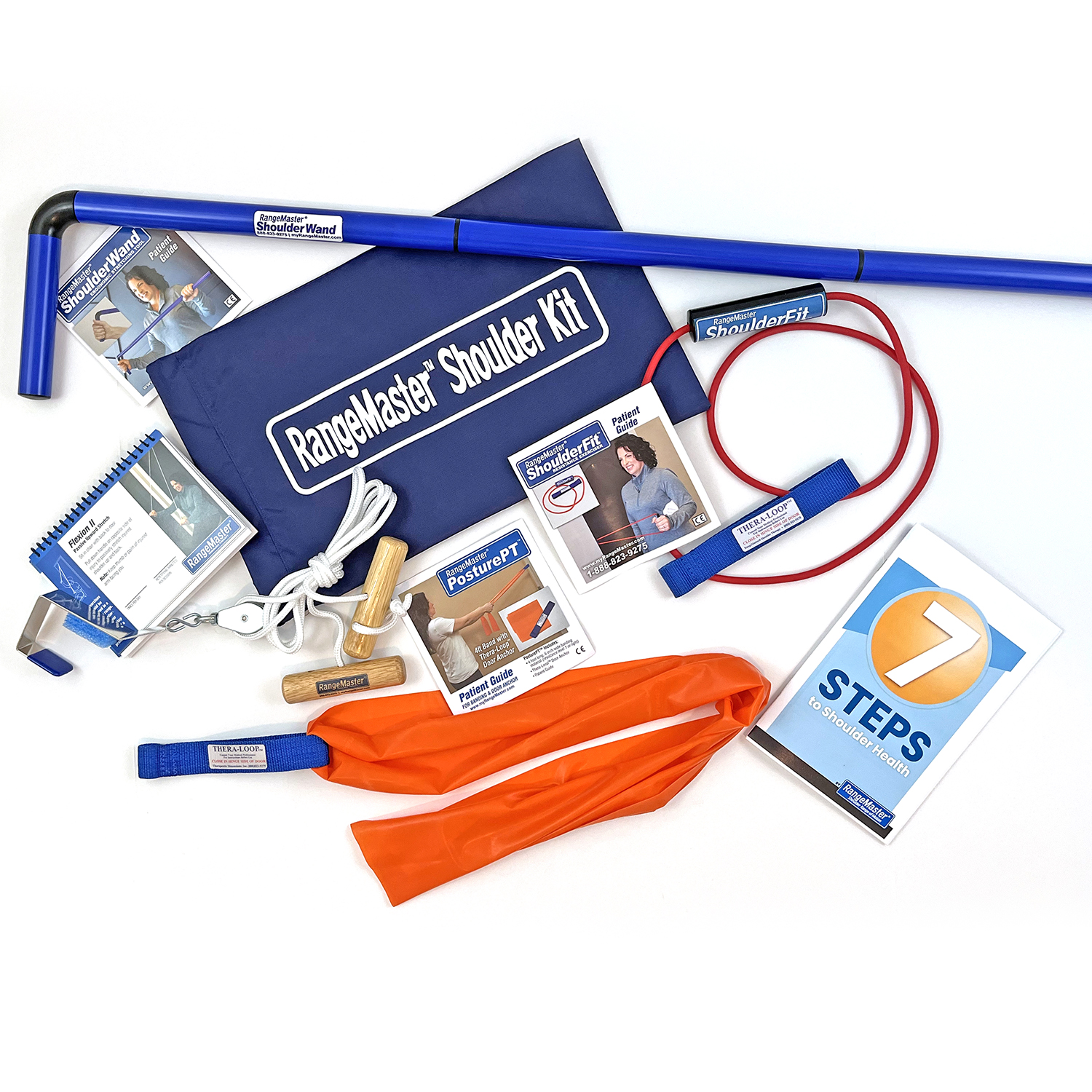
Learn how to manage sore-shoulder days, practice your home routine, and work toward the activities you want back. The program includes Shoulder Kit Pro, a Shoulder Compression Wrap, 18 lessons and tutorials, and printable resources. All lessons open after payment while the equipment ships.
Understand the words used for your shoulder
Connect tendonitis, tendinosis and tendinopathy to an everyday example from your own life.
A shoulder report can give you a name before you have a clear idea what to do next. Start by putting the report beside your symptoms and one task. A real example from your day makes it easier to understand what your clinician is looking for and how the findings might affect your plan.
Learn what the rotator cuff does
The rotator cuff is a group of muscles and tendons around the shoulder. Tendons connect muscle to bone. The cuff helps keep the top of the upper arm centered as you lift, turn or lower your arm.
Pain from the cuff area can show up in front of or to the side of the shoulder and into the upper arm. Other conditions can produce symptoms in the same area. Clinicians consider several pieces together, including change in strength, motion and the way symptoms began.
Read the terms in context
Tendonitis or tendinitis is often used for suspected irritation or inflammation. Tendinosis is a term some scan reports use for changes in tendon tissue. Tendinopathy is a broader clinical term for tendon-related pain and difficulty with activities that load the tendon.
The term on a report only describes part of your situation. Bring the full report to your next visit and ask how the finding relates to your examination and your goals. A recent injury or sudden loss of strength deserves assessment before you start a home program.
Make the next conversation more specific
Write down one activity, the part that feels hard and when the symptoms appear. An example might be “I can open the cupboard but lowering a plate from the top shelf is hard.” If you have instructions already, add the movement or restriction that is unclear.
- Copy the exact wording from your visit notes.
- Pick a real task you want to do more easily.
- Ask what the exam means for that task.
Bring the report wording and one everyday example to your next visit.
Make a hard everyday task easier
Find one practical change in how you lift, reach, carry or repeat a task.
Daily movements add up. Carrying a bag, reaching to put its contents away and then cleaning the upper shelves can create a busy hour for the shoulder. Changing a small part of the job may make it feel more manageable and show you what to discuss with your clinician.
Look for what the task asks of you
Take a familiar job, such as putting groceries away. Are you lifting something heavy, holding it far from you, reaching above shoulder height, or doing the same reach again and again? Notice which part is hardest and how long it takes to settle afterward.
The combined demands of home, work and exercise can matter. A routine that felt manageable on a quiet day might feel different after a long stretch at work.
Change one part of the setup
For groceries, set the bag down before unpacking it. Use both hands for a larger item, put everyday items at an easier height or carry smaller loads. For laundry, separate the load or set the basket on a stable work surface before sorting.
- Change the height of what you reach for.
- Split a heavy task into smaller parts.
- Pause between sets of repeated movements.
Observe what changed
Ask yourself whether the new setup helped during the task, later that day or the next morning. If it helps, use it again. If it still feels hard, write down which part remained hard and what you might ask for at work or at your next visit.
Follow any restrictions you already have. Arrange an assessment if the problem followed a recent injury or your arm has suddenly lost strength or movement.
Choose one task, change one detail and write down what happened.
Tendon-focused nonsurgical care
Understand your symptoms and make your clinician’s home plan easier to use.
Understand your shoulder
- Understand the words used for your shoulder
- Choose the first activity you want back
Make daily life easier
- Make a hard everyday task easier
- Plan for uncomfortable nights and harder days
Build a workable home plan
- Get more from your shoulder assessment
- Turn your instructions into a routine
Practice with confidence
- Understand assisted movement and setup
- Notice how your shoulder responds to practice
Build strength and capacity
- Start strengthening with a clear setup
- Know what to change as practice gets easier
Get back to what matters
- Return to tasks that matter to you
- Review what has changed and what comes next
Equipment guides
- Meet your kit
- Set up your pulley
- Use your ShoulderWand
- Use ShoulderFit
- Use PosturePT
- Use your compression wrap
Use the lessons to organize the plan you agree on with your care team.