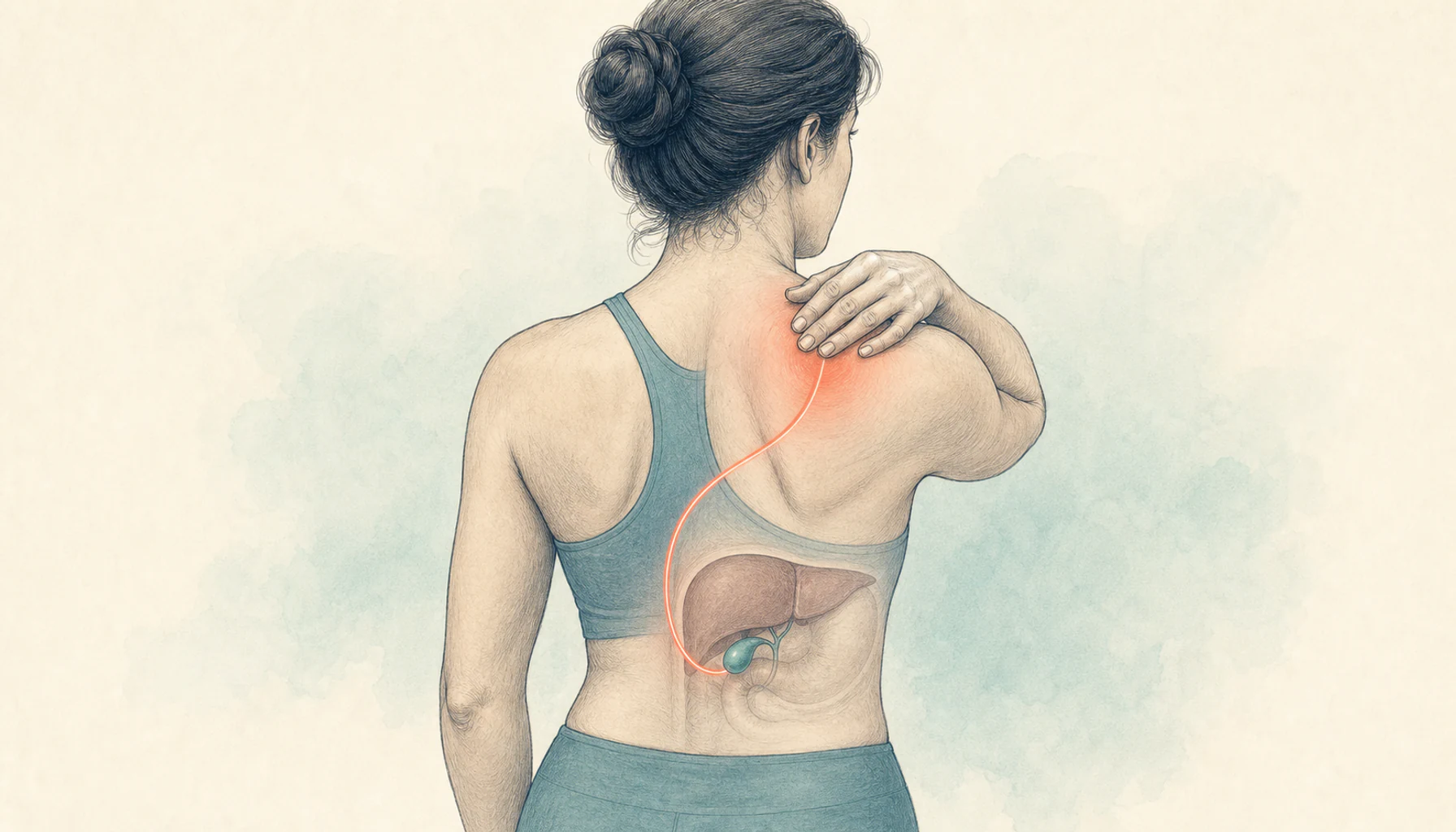
Gallbladder pain most often spreads to the right shoulder. It can also be felt beneath the right arm or in the back between the shoulder blades. The main source of pain is usually in the upper-right abdomen, beneath the ribs.
Right-shoulder pain by itself cannot confirm a gallbladder problem. Gallstones, heart conditions, neck nerve irritation, and injuries around the shoulder can create overlapping symptoms. A healthcare professional may need blood tests and imaging to find the source.
Where gallbladder pain is usually felt
The gallbladder sits beneath the liver in the upper-right part of the abdomen. Gallstones can form inside it without causing symptoms. Pain generally begins when a stone blocks a bile duct and pressure builds inside the biliary system.
According to Mayo Clinic and Cleveland Clinic, a gallbladder attack may cause pain in several connected areas:
- The upper-right abdomen, under the ribs
- The upper-middle abdomen, below the breastbone
- The right shoulder
- The back between the shoulder blades
- The area beneath the right arm
This spread is called referred or radiating pain. The painful sensation can be felt away from the organ where it began.
What a gallbladder attack can feel like
Typical gallstone pain can begin suddenly and build quickly. People describe it as sharp, squeezing, cramping, or intense. It may become difficult to sit still or find a comfortable position.
An episode can last from several minutes to a few hours. It may occur after eating because the gallbladder contracts to release bile during digestion. Nausea and vomiting can occur with the pain.
A gallbladder attack can end when the stone moves and pressure eases. A previous attack raises concern for another blockage, so recurring episodes deserve medical evaluation even when the pain goes away.
Right-shoulder pain can have other sources
Movement-related shoulder pain often changes when you lift, reach, rotate the arm, or lie on the sore side. Neck nerve irritation may send pain, tingling, numbness, or weakness down the arm. Heart-related pain can involve the shoulder or arm and may occur with chest pressure, sweating, nausea, lightheadedness, or shortness of breath.
Gallbladder symptoms commonly include upper abdominal pain along with the shoulder or back pain. Symptom patterns can guide an evaluation, while testing is needed to confirm the cause.
A clinician may use your medical history, an examination, blood tests, and imaging. The National Institute of Diabetes and Digestive and Kidney Diseases notes that blood testing can show signs of infection or inflammation involving the gallbladder, bile ducts, pancreas, or liver. Ultrasound is commonly used to look for gallstones and signs of blockage.
When gallbladder symptoms need immediate care
A blocked bile duct can lead to inflammation, infection, jaundice, or pancreatitis. These complications can become serious.
Seek immediate medical care if you have:
- Abdominal pain so intense that you cannot sit still or get comfortable
- Yellowing of the skin or the whites of the eyes
- High fever with chills
- Severe or persistent upper-right abdominal pain
- Shoulder or upper-body pain with chest pressure or trouble breathing
NIDDK advises prompt medical attention when gallstones block a bile duct and cause sudden pain. A stone that remains stuck can interfere with bile flow and affect several organs.
Call emergency services for shoulder or arm pain accompanied by chest pressure, shortness of breath, a cold sweat, nausea, or lightheadedness. Those symptoms can occur during a heart attack and should not be assigned to the gallbladder at home.
What happens after a gallstone diagnosis
Gallstones that never cause symptoms may not require treatment. Symptomatic gallstones often need treatment because duct blockages can recur. Mayo Clinic and NIDDK describe gallbladder removal surgery as the most common treatment for gallstones that cause attacks or complications.
The appropriate plan depends on the location of the stones, the presence of inflammation or infection, and the person's overall health. A clinician can explain which tests and treatments apply to the individual situation.
Reading about shoulder-specific pain
Once an abdominal or cardiac cause has been assessed, RangeMaster's guide to shoulder discomfort and treatment options explains common musculoskeletal causes. The article on neck-related shoulder pain covers symptoms that may begin around the neck and shoulder.
This article provides general medical education and does not diagnose gallstones or shoulder pain. Read our medical disclaimer. Seek prompt care for severe or recurring upper abdominal pain and immediate help for jaundice, fever with chills, chest pressure, breathing difficulty, or faintness.